




2026 State of Accreditation Report: 5th Edition
In this year’s State of Accreditation Report, AACSB is pleased to share insights from accreditation visits conducted throughout 2025–26. Created to support shared learning across our member community, this report demonstrates our ongoing commitment to continuous improvement while highlighting key outcomes, exemplary practices, and opportunities for continued growth.
Business Accreditation
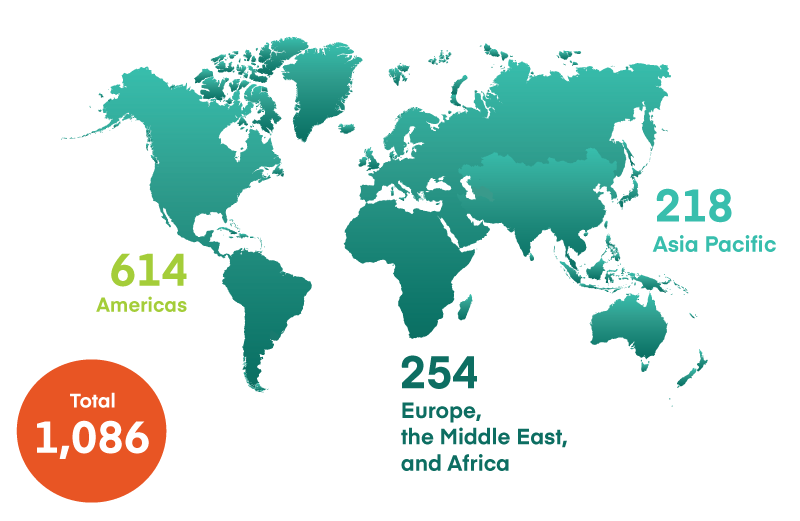
Regional Representation as of 30 June 2026

A Leadership Perspective
 Stephanie Bryant Executive Vice President and Chief Accreditation Officer AACSB International |
Each year, this report provides an opportunity to step back and learn collectively from the accreditation process.
|

Accreditation Outcomes
AAC, IAC, and CIRC Committee Meeting Outcomes, 1 July 2025 through 30 June 2026
The 2026 State of Accreditation Report reflects a lower number of continuous improvement review (CIR) outcomes compared to previous years. This decrease is the result of AACSB’s transition from a five-year to a six-year accreditation cycle. As part of the transition, schools scheduled for a CIR visit in 2025–26 were given the option to move their visit to 2026–27, temporarily reducing the number of visits conducted during the 2025–26 reporting year.
68% of schools with visits scheduled for 2025–26 opted to move their visits to 2026–27.

Notes:
Data displayed are for initial and extended accreditations as of 30 June 2026.
Total number of schools extending accreditation: 88 (includes business and accounting).
Total number of schools achieving initial business accreditation: 35.
Initial Business Accreditation
Number of Schools in Process as of 30 June 2026
| Total: 326 |
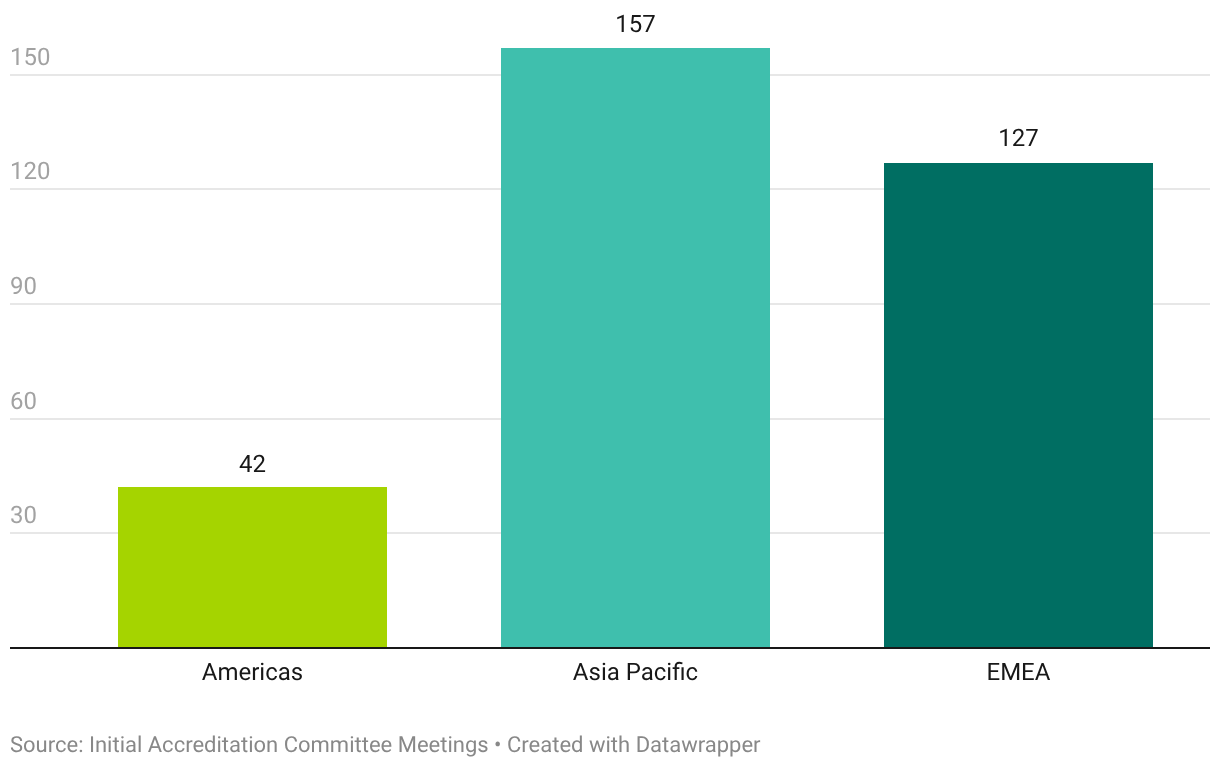
Initial Accreditation Visits Between 1 July 2025 and 30 June 2026, Outcomes by Region
| Total: 40 |

Continuous Improvement Review
CIR Visits Between 1 July 2025 and 30 June 2026, Outcomes by Region
| Total: 79 |


Accreditation Insights
Business Standards Most Cited by Peer Review Teams
Schools With Outcomes Between 1 July 2025 and 30 June 2026, With Accredit and Extend Recommendations
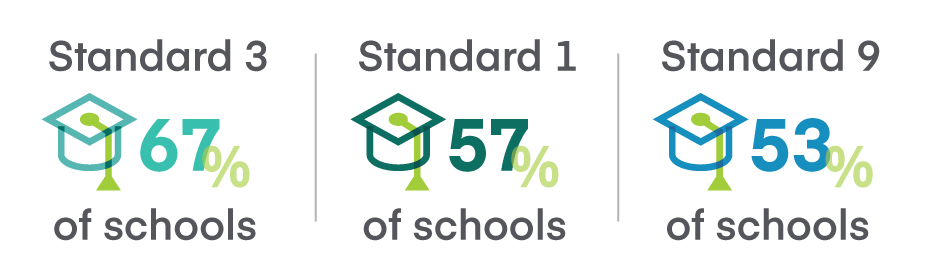
In peer review team reports for both initial accreditation and continuous improvement review (CIR) visits in 2025–26, the following standards are cited the most frequently as having issues that schools need to address by their next visit.
Source: School Decision Reports
Standard 3: Faculty and Professional Staff Resources—Summary of Common Issues |
- Faculty Qualification Criteria: Peer review teams cited concerns with Scholarly Academic (SA) criteria that allowed faculty to maintain SA status without producing peer-reviewed journal articles. AACSB strengthened its language in 2024 to clarify that maintaining SA status requires peer-reviewed article production, consistent with the faculty member’s assigned duties and the school’s mission, alongside other forms of sustained academic engagement.
- Professional Engagement and Policy Alignment: Teams identified school criteria for Practice Academics (PA) and Instructional Practitioners (IP) that were not sufficiently grounded in substantive, current professional engagement. Teams also encouraged schools to align faculty qualification policies and review periods with the six-year accreditation cycle.
- Faculty Qualifications and Sufficiency: Although schools often met overall faculty qualification ratios, they sometimes fell short of meeting discipline-level SA and participating faculty ratios. Teams also noted risks associated with heavy reliance on adjunct, visiting, additional, or supporting faculty.
- Faculty Workforce Sustainability: Faculty retirements, turnover, competitive hiring markets, and program growth presented challenges for some schools in maintaining appropriate faculty capacity and qualifications.
For more information on insights related to Standard 3, please see Faculty Insights.
Standard 1: Strategic Planning—Summary of Common Issues |
- Measurable Goals and Outcomes: Peer review teams identified strategic priorities that lacked clear baselines, targets, or key performance indicators, limiting a school’s ability to effectively measure progress and demonstrate achievement of strategic goals.
- Risk Management and Financial Sustainability: Teams emphasized the need to move beyond traditional SWOT analyses toward continuous risk management and contingency planning, including defined risks, mitigation strategies, and scenario modeling. Financial sustainability was also a recurring concern, particularly for schools reliant on limited or declining revenue sources.
- Implementation and Accountability: Teams identified gaps in responsibilities, timelines, resource commitments, and mechanisms for monitoring and communicating progress. They encouraged schools to ensure that strategic priorities were supported by appropriate resources and clear accountability for implementation.
- Strategic Positioning and Responsiveness: Schools were encouraged to more clearly define their distinctive competitive positions, benchmark against relevant peers and aspirants, incorporate meaningful stakeholder input, and regularly reassess strategies in response to technological, geopolitical, regulatory, and financial changes.
For more information on insights related to Standard 1, please see Strategy Insights.
Standard 9: Societal Impact—Summary of Common Issues |
- Clear Focus and Measurable Impact: Peer review teams most frequently identified the need for schools to define specific societal impact focus areas aligned with their missions and to distinguish activities and outputs from measurable outcomes. Some schools presented examples of engagement as impact, which did not on their own demonstrate meaningful societal change.
- Strategic Integration and Coordination: Peer review teams identified societal impact initiatives that were fragmented across programs and units or lacked integration into formal strategic goals, measurements, and monitoring processes. They encouraged schools to establish coordinated frameworks, shared objectives, and common indicators.
- Scholarship and Demonstrated Impact: Teams highlighted opportunities to strengthen the connection between scholarship and societal impact by moving beyond documenting research activity or dissemination to articulating and providing evidence of tangible outcomes.
Standards 3 and 5 were cited for 54 percent of schools with a CIR2 recommendation.
Strategic Planning and Risk Analysis Insights
Core Priorities Within School Strategic Plans
These were the most commonly cited strategic priorities within the strategic plans of schools with accreditation visit outcomes in 2025–26:
| Strategic Priority | Percentage |
| Academic Excellence and Innovation | 91% |
| Community and Sustainability Impact | 87% |
| Student Success | 81% |
| Faculty Development | 78% |
| Financial Sustainability | 42% |
| Global Engagement | 42% |
15.6
average number of pages in strategic plans
4.8
average number of years strategic plans cover
5.1
average number of goals in strategic plans
9.6
average number of risks reported in school risk analyses
Top 5 Categories Identified in School Risk Analyses

Risk Categories
|
Source: School Strategic Plans and Risk Analyses
 |
Year-over-year findings show consistency in the priorities and risks shaping business schools, with academic excellence, student success, societal impact, faculty capacity, enrollment, and financial sustainability continuing to command significant strategic attention. |
Faculty Insights
Faculty Qualification Ratios for Schools With Visits in 2025–26
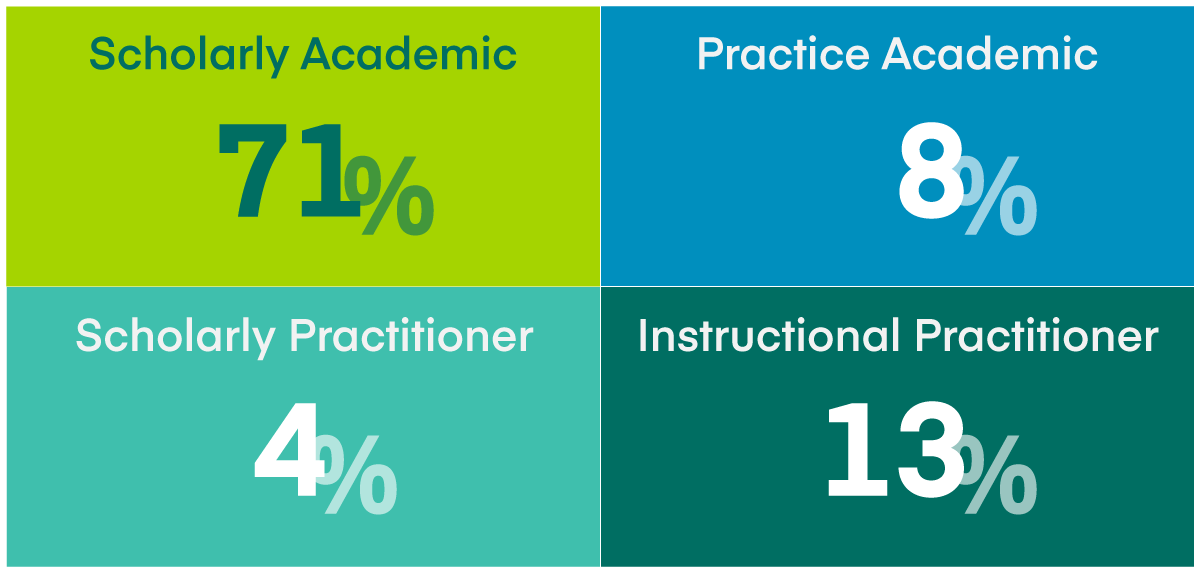
Note: The category of Additional Faculty, representing 4 percent, is not included above.
The overall participating faculty ratio for schools visited in 2025–26 is 84 percent.
Scholarly Academic Ratios by Discipline

|
Faculty composition remained relatively stable compared with the prior year. The overall participating faculty ratio shifted from 87 percent in 2024–25 to 84 percent in 2025–26, while Scholarly Academic ratios across disciplines remained generally consistent. |
Common Competencies
An analysis of Table 5-1 submissions from 2025–26 accreditation visits provides insight into the competencies most commonly assessed across program levels. Because Table 5-1 is optional for accredited schools, these findings represent only the schools that submitted the table and should not be interpreted as encompassing all schools visited during the accreditation year.
Included in 65 percent of tables analyzed, Ethics and Social Responsibility and Critical Thinking and Analysis were the most widely assessed competencies.
Top 10 Competencies Assessed Across Programs

| Most Commonly Assessed Competency by Program Level | ||
|---|---|---|
| Undergraduate | Critical Thinking and Analysis | 70% |
| Master’s | Ethics and Social Responsibility | 66% |
| Doctoral | Research and Inquiry | 71% |
Source: Table 5-1
Thought Leadership Insights
Intellectual Contribution Outputs for Schools With Visit Outcomes in 2025–26
Portfolio of Intellectual Contributions (n=95,314)

Types of Intellectual Contributions (n=96,810)

Note: Values have been rounded and may not equal 100 percent.
Disciplines Producing the Most Intellectual Contributions

Top Scholarly Impact Themes
What does Table 8-1 tell us?
| Theme | Description | Number of Schools | |||||
|---|---|---|---|---|---|---|---|
| Business and Industry Practice | Intellectual contributions that influence business practice, organizational decision-making, professional practice, entrepreneurship, executive education, innovation, or industry partnerships. | 74 | |||||
| Societal, Community, and Sustainability Impact | Research and engagement that address societal challenges, community well-being, sustainability, ESG, the U.N. Sustainable Development Goals, or social impact initiatives. | 68 | |||||
| Public Policy and Government | Contributions that inform public policy, government decision-making, regulatory frameworks, public administration, or collaborations with governmental organizations. | 66 | |||||
| Academic and Scholarly Influence | Research that advances academic knowledge through publications, citations, conferences, theoretical development, research collaborations, or influence on future scholarship. | 62 | |||||
| Teaching, Learning, and Student Impact | Intellectual contributions incorporated into curricula, pedagogy, experiential learning, student outcomes, faculty development, or educational innovation. | 61 | |||||
|
Scholarly impact extends well beyond academic audiences. The leading themes show business school research contributing to business practice, societal challenges, public policy, academic knowledge, and teaching and learning—demonstrating the multiple pathways through which scholarship can create impact. AACSB has provided schools with a framework to better define, support, assess, and communicate research impact. The framework presents teaching, scholarship, and societal engagement as interconnected dimensions of a broader impact ecosystem. |
Supplemental Accounting Accreditation
Accounting Visit Outcomes Between 1 July 2025 and 30 June 2026
| Total: 15 |

Accounting Standards Most Cited by Peer Review Teams for Outcomes Between 1 July 2025 and 30 June 2026, With Extend Recommendations
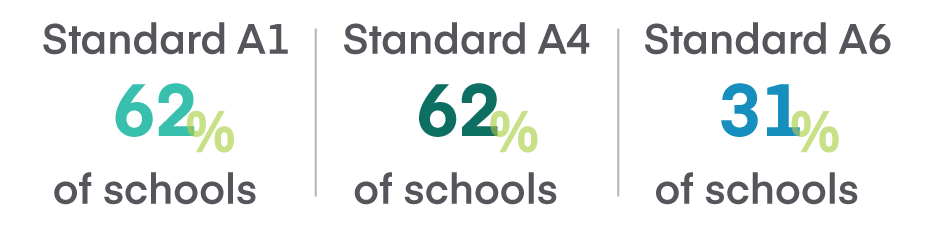
In peer review team reports for accounting continuous improvement review (CIR) visits in 2025–26, the following standards are cited the most frequently as having issues that schools need to address by their next visit.
Source: Accounting Unit Decision Reports
Standard A1: Mission, Impact, and Innovation—Summary of Common Issues |
- Measurable Goals and Mission Alignment: Peer review teams identified a lack of measurable metrics, baselines, and targets for evaluating strategic progress. Teams also noted mission statements that did not fully reflect the accounting unit’s purpose, scholarship, faculty contributions, or distinctive attributes.
- Risk Assessment and Benchmarking: Teams encouraged accounting units to more fully integrate risk assessment, SWOT findings, and benchmarking against peer, aspirant, and competitor institutions into strategic planning.
- Resources and Implementation: Strategic plans did not always identify the resources necessary to achieve a school’s stated goals, including sufficient faculty capacity, sustainable workloads, program marketing, and investments needed to support enrollment and program objectives.
Standard A4: Curriculum Content and Assurance of Learning—Summary of Common Issues |
- Closing the Loop and Continuous Improvement: Peer review teams identified insufficient evidence that schools’ assessment findings led to improvements that were subsequently reassessed. Teams also emphasized that schools should assess learning goals multiple times during the accreditation cycle to demonstrate continuous improvement.
- Assessment Measures and Expectations: Teams identified measures that were too broad or did not directly assess the competencies associated with learning goals. When performance targets were consistently met or exceeded, review teams encouraged accounting units to strengthen expectations, refine measures, or introduce more advanced competencies.
- Disaggregation of Results: Teams identified opportunities to better disaggregate assessment results across campuses, delivery modalities, and program levels to ensure aggregated data do not obscure meaningful differences in student learning.
Standard A6: Faculty Sufficiency, Credentials, Qualifications, and Deployment—Summary of Common Issues |
- Faculty Sufficiency and Qualification Risks: Peer review teams identified retirements and enrollment growth as pressures on faculty capacity and SA ratios, emphasizing the importance of succession planning and continued monitoring.
- Teaching Demands and Faculty Workloads: Reliance on faculty overloads to cover required courses, combined with growth in graduate programs, raised concerns among peer review teams about schools’ long-term sustainability of teaching workloads.
- Sustainable Faculty Planning: Teams encouraged accounting units to proactively evaluate faculty capacity, pursue additional faculty lines where needed, and develop staffing strategies that support program growth while maintaining appropriate qualification and sufficiency ratios.
CIR Application Insights
Simultaneous to moving to a six-year accreditation cycle, AACSB introduced an expanded continuous improvement review application that provides a mid-cycle opportunity for schools to discover potential risks to continued alignment with AACSB standards. Submitted in the third year of the six-year accreditation cycle, the application focuses on key areas including societal impact, faculty qualifications, strategic planning, and assurance of learning. AACSB accreditation staff review each application and provide schools with guidance to support continued progress ahead of their next peer review team visit. The insights below highlight common themes identified in CIR applications submitted in 2024 and 2025.
96.8%
of business CIR applications included at least one standard area requiring attention prior to the school’s next visit.
78.6%
of accounting CIR applications included at least one standard area requiring additional attention prior to the school’s next visit.
Most Common Standards Cited: Business
| Top Standards Cited | 2024 | 2025 |
| Standard 3: Faculty and Professional Staff Resources | 90% | 92% |
| Standard 9: Engagement and Societal Impact | 31% | 15% |
Common Themes: Business
Across CIR application reviews in 2024 and 2025, AACSB staff commonly cited faculty qualifications, sufficiency, and discipline reporting as needing improvement. Schools were frequently advised to monitor faculty ratios and ensure that faculty were appropriately classified by academic discipline. In reviewing societal impact efforts, AACSB staff often noted that schools should better align impact initiatives with their missions and strategies and provide measurable evidence of outcomes.
Most Common Standards Cited: Accounting
| Top Standards Cited | 2024 | 2025 |
| Standard A4: Accounting Curricula Content, Management, and Assurance of Learning—Related Business Standards 4 and 5 | 40% | 52% |
| Standard A6: Accounting Faculty Sufficiency, Credentials, Qualifications, and Deployment—Related Business Standard 3 | 60% | 50% |
Common Themes: Accounting
Across both years, faculty qualification and sufficiency ratios were the dominant areas in need of continued progress, particularly maintaining required thresholds and demonstrating progress when ratios fall below expectations. Assurance of learning and curriculum management also feature prominently, with schools expected to show how assessment results lead to specific curriculum improvements.
Source: School CIR applications submitted in 2024 and 2025.

Volunteers
Every application before the Eligibility Review Committee offers a fresh insight into global business education. Evaluating how diverse institutions build quality, governance, and societal impact into their programs makes serving on the committee a continuous learning experience. It is a privilege to support applicant schools while expanding my own perspectives alongside dedicated colleagues.

I have enjoyed serving as an AACSB mentor because it has helped me give back to the academic community. Helping other business schools, especially from a different country, is challenging and exciting. In a small way, I feel that my mentor role has helped bring the key stakeholders within a knowledge industry to an even playing field. It has been a fulfilling experience working with the two business schools from India.

Being a mentor for AACSB has been especially meaningful at this stage of my career. With experience comes a responsibility to give back, and this role has been a wonderful way to pay it forward. Volunteering as a mentor allows me to share insights, support others in their development, and contribute to a strong, collaborative community.

What I enjoy most about serving on the Continuous Improvement Review Committee is the opportunity it gives me to learn how business schools around the world pursue continuous improvement. I not only carry something back to my own institution from each review, I also benefit from learning about the unique cultural and institutional nuances that shape accreditation. In a way, service on the CIRC ensures that I too am continuously improving as a dean.

Volunteer Representation in 2025–26

Notes:
This list includes individuals who served as a volunteer between 1 July 2025 and 30 June 2026, in one of the following roles:
• Operating Committee Member (Accounting Accreditation Committee—AAC; Accounting Accreditation Policy Committee—AAPC; Business Accreditation Policy Committee—BAPC; Continuous Improvement Review Committee—CIRC; Eligibility Review Committee—ERC; Initial Accreditation Committee—IAC)
• Mentor (business or accounting)
• Team Chair (business or accounting)
• Team Member (business or accounting)
Only individuals who agreed to be listed are included. If your name does not appear and you served on one of the roles listed above between 1 July 2025 and 30 June 2026, and would like to be added, please contact us at [email protected]. Thank you.
Volunteer Representation
| 98% | School Satisfaction With Standards Visit |
| 95% | School Satisfaction With myAccreditation |
| 100% | Volunteer Training Preparation for Accreditation Visit |
| 96% | Satisfaction With Volunteer Training |
Training Statistics
| 1,109 | Total Volunteers Have Been Trained on the Standards |
| 79 | Individuals Were Newly Trained in 2025–26 |
| 423 | Total Individuals Have Completed the Refresher Training |

Societal Impact
Business schools play an important role in addressing some of the world’s most pressing challenges. AACSB’s accreditation standards provide a framework for schools to identify societal impact priorities, develop strategies aligned with their missions, and demonstrate meaningful progress toward their goals. To better understand and communicate these efforts, AACSB has adapted the Stockholm Resilience Centre’s “wedding cake” model for the business education context. This framework organizes societal impact across three interconnected domains—People, Economy, and Environment—providing a lens for examining how business schools are contributing to positive change.

Societal Impact Focus Areas
Initiatives Reported From Visits Between 1 July 2025 and 30 June 2026

Societal Impact Exemplars

The University of Louisiana at Lafayette supports regional economic development through its Louisiana Entrepreneurship & Economic Development (LEED) Center and its Small Business Development Center (SBDC). The LEED Center provides entrepreneurship training, support, and mentorship programs to early-stage entrepreneurs. Since 2021, the LEED Center has trained over 500 entrepreneurs who have launched more than 100 new LLCs. The SBDC, provides entrepreneurs and small business owners with advising services, training, and resources to help launch, strengthen, and grow their businesses. Between 2021 and 2024, the center supported 82.5 million USD in capital formation, demonstrating its role in connecting entrepreneurs with the financial resources needed to pursue business growth and investment. By combining the university’s expertise and resources with direct support for the regional business community, these centers help strengthen entrepreneurial capacity, expand access to capital, and contribute to the economic vitality of the communities they serve.

Trinity Business School’s Centre for Social Innovation advances the nature-positive economy with European Union funding. The initiatives connect research with policy, education, and practice in regions, cities, farms, and coastal communities. Through projects including GoNaturePositive!, ReFarm, C-FAARER (a regenerative aquaculture initiative), and Nature-Based Solutions EduWORLD, the center has developed tools and approaches to strengthen economic development, environmental stewardship, and sustainable planning. GoNaturePositive is currently bringing together more than 60 cities and regions from around the world with business and academic partners to integrate nature-based solutions into urban planning, economic policy, and governance. NBS EduWorld has developed 50 educational learning units for third-level education while projects like ReFarm translate research into practical farm-level action for nature restoration. C-Faarer contributed to the launch of the Irish Seaweed Association, extending the projects’ impact through networks and institutions that support continued action.

For more than 13 years, Xiamen University has partnered with Longde County in Ningxia Province to advance poverty alleviation through education, technical expertise, workforce development, and economic support. The university directly invested and helped secure 167 million RMB (nearly 25 million USD) in assistance funding, trained more than 13,000 local officials and technical personnel, and supported local livelihoods through the purchase and sale of nearly 90 million RMB (about 13.4 million USD) in agricultural products. The partnership also leveraged faculty expertise to strengthen local industries, including tourism planning and development, demonstrating a sustained approach to building local capacity and expanding economic opportunity.

Five-Year Retrospective
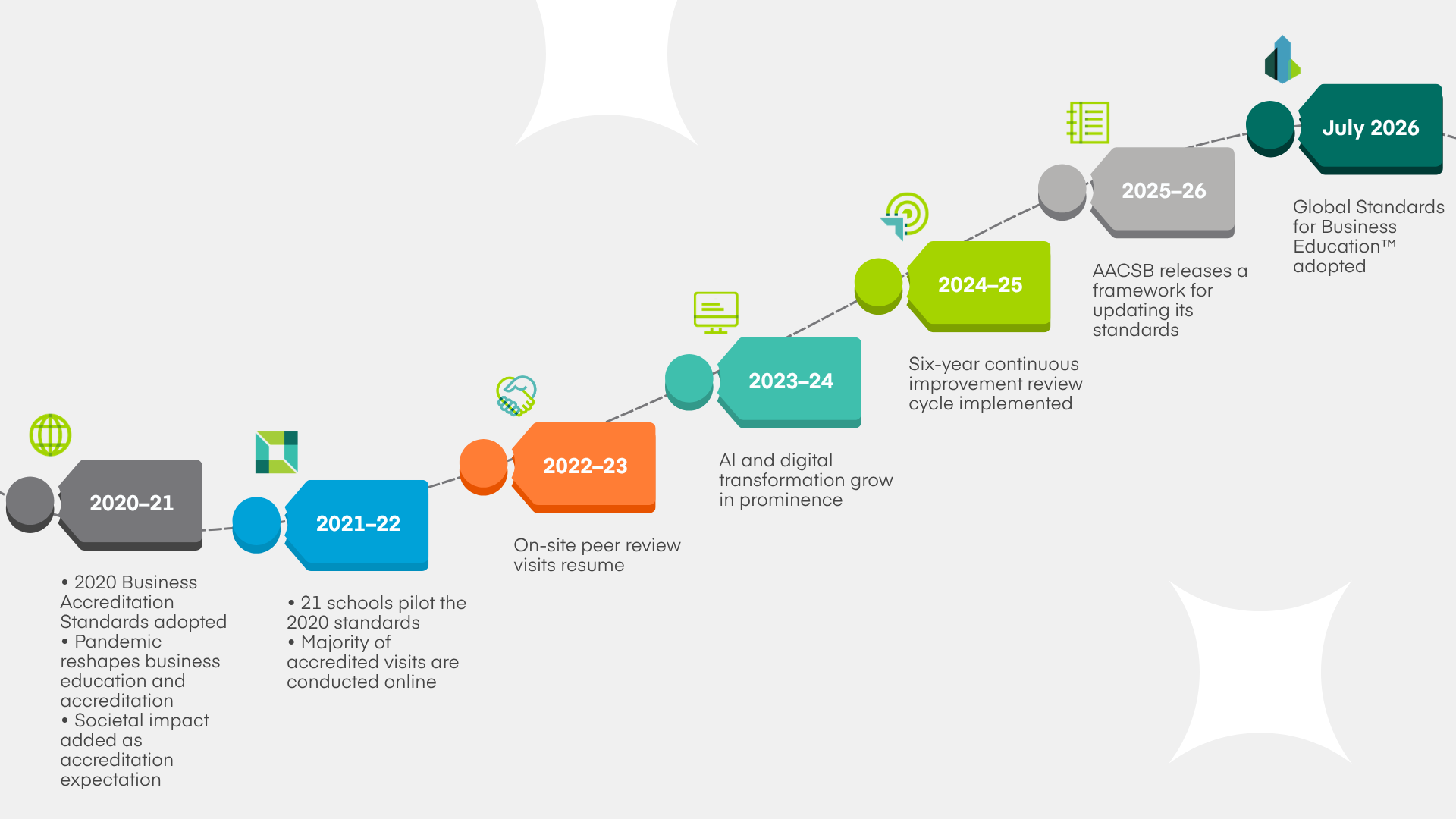
Five years after the introduction of the 2020 accreditation standards, AACSB has a unique opportunity to reflect on how business education—and accreditation itself—has evolved. This retrospective highlights key trends across the accreditation community, illustrating how schools have advanced their missions, strengthened continuous improvement, adapted curricula, and responded to emerging priorities shaping business education.
Five Years of Accreditation in Numbers
Number of Schools Receiving Initial Accreditation Under 2020 Business Standards, 2021–22 to 2025–2026
| Fiscal Year (beginning 1 July) | School Count |
| 2021–22 | 2 |
| 2022–23 | 6 |
| 2023–24 | 21 |
| 2024–25 | 27 |
| 2025–26 | 35 |
| Grand Total | 82 |
Footnote: Schools in the initial accreditation process generally required three years to transition to the 2020 standards, contributing to the lower number of initial accreditation visits in 2021–22 and 2022–23.
Number of Schools With Business Accreditation Extended, 2021–22 to 2025–2026
| Fiscal Year (beginning 1 July) | School Count |
| 2021–22 | 121 |
| 2022–23 | 134 |
| 2023–24 | 186 |
| 2024–25 | 196 |
| 2025–26 | 73 |
| Grand Total | 710 |
Number of Accredited Schools, 2021–22 Through 2025–26

Over the five fiscal years from 2021–22 through 2025–26, AACSB accreditation grew globally by 14.3 percent, with particularly strong growth in EMEA (36.6 percent) and Asia Pacific (29.0 percent). Together, these two regions accounted for 86 percent of the net increase in accredited schools, reflecting AACSB’s expanding global reach.
Number of In-Process Schools, 2021–22 Through 2025–26

Five-Year Accreditation Journey Milestones
Areas of Continuous Improvement
In the last five years, peer review teams most frequently cited Standards 1 and 3 as having areas schools needed to address by their next visit. This suggests strategic planning and faculty qualifications continued to be common areas of focus throughout the implementation of the 2020 standards. In the same period, schools in the initial accreditation process most frequently self-identified Standard 5, Assurance of Learning, as needing continuous improvement.
Standards Most Commonly Cited by Peer Review Teams, 2021–22 Through 2025–26

Source: Peer review team reports, 1 July 2025 through 30 July 2026
Percentage of Business CIR Decisions Resulting in CIR2

As schools began implementing the 2020 standards, including their efforts toward societal impact, both schools and accreditation volunteers developed a deeper and more consistent understanding of the standards’ expectations. Peer review teams and accreditation committees gained experience in interpreting and applying the standards, while schools similarly were advised to strengthen their approaches over time. The growth in CIR2 decisions—when schools need an additional year to resolve issues—across much of the five-year period reflects this evolution, as reviewers increasingly looked for more mature evidence of continuous improvement and alignment with the standards.
Insights: The Evolution of Mission and Strategy
Across the five-year period, strategic planning reflects a shift toward greater intentionality and integration. This finding is consistent with the AACSB’s recent 2026–27 Deans Survey: Findings in Focus report, which identified strategic planning as the number one priority of AACSB deans at this time. Schools are increasingly articulating societal impact as a distinct strategic priority, connecting school-level plans more explicitly to broader institutional strategy, and incorporating accreditation into their strategic objectives. At the same time, the pillars that schools name most in their strategic plans illustrate how they are prioritizing efforts toward their missions.
These trends suggest that strategic plans are becoming more connected frameworks—linking mission, institutional direction, societal impact, and continuous improvement.
Most-Named Pillars in School Strategic Plans

Source: Strategic plans and CIR reports submitted by schools visited from 2021–22 to 2025–26
Insights: The Evolution of Curriculum and Learning
Top 3 Competencies by Education Level

Source: Table 5-1 submitted between 2021–22 and 2025–26
One way innovation shows up is through the creation of new programs. Over the last five years, 718 schools described 3,021 new degree programs—either newly launched or in development—across the five-year period. The types of programs being developed also point to changing areas of demand. Analytics, Data Science, and AI represent the largest category, accounting for 19 percent of new programs analyzed, followed by General Management/MBA programs at 17 percent and Finance and Economics at 11 percent. When Information Systems and Technology programs are included with Analytics, Data Science, and AI, technology-related offerings account for 28 percent of all new programs, highlighting the growing emphasis on data, AI, and technology capabilities across business education.
In-person formats continue to lead among new launches, while online, hybrid, and executive modalities together represent a substantial share of the educational experiences schools are building.
New Degree Programs by Delivery Modality (n=2,081 of 3,021)

Source: AACSB CIR reports. Of the 3,021 new degree programs identified in reports analyzed over the five-year period, 2,081 (68.9 percent) specified a delivery modality. The chart reflects only those programs for which delivery modality information was available.
AI in the Business School
Over the past five years, artificial intelligence has moved rapidly from an emerging topic to a near-universal consideration in business education. AI appeared in roughly one-third of CIR reports in the first two years following the release of 2020 standards before rising sharply beginning in 2023–24. By 2025–26, 95 percent of reports discussed AI, and 54 percent specifically referenced generative AI. The shift is increasingly forward-looking: Across the five-year analysis, technology and AI were identified as a future priority substantially more often than as a current challenge, as schools consider how AI will reshape curricula, faculty development, academic integrity, and the skills graduates need for an AI-enabled workplace.
AI in Business Education: Rapid Growth Over Five Years
The percentage of CIR reports that mention AI and genAI has increased substantially since 2021–22, reflecting the growing influence of these technologies in business school strategy, curricula, and operations.

Analysis of school reports over the past five years points to a growing integration of generative AI across business education. However, this rapid adoption is not yet reflected to the same extent in assurance of learning, where AI proficiency remains less commonly measured as a core competency.
Insights: The Evolution of Societal Impact in Business Education
The 2020 standards elevated societal impact as an explicit expectation of AACSB accreditation, prompting schools to consider more intentionally how their teaching, research, and engagement contributed to society. Five years later, evidence from continuous improvement reviews suggests that societal impact has moved beyond an emerging accreditation expectation to become an increasingly established part of business school strategy and operations.
Across the five-year analysis, community and societal impact was identified as a strategic priority by 86 percent of schools, placing it among the most commonly reported priorities, alongside academic excellence and innovation. Schools also reported nearly 5,000 societal impact activities spanning economic, societal, and environmental priorities, demonstrating the breadth of ways business schools are translating their missions into action.
At the same time, the evidence points to the next stage in this evolution: moving from activity to demonstrated impact. Most of the reported initiatives currently provide evidence at the output or outcome stages of AACSB’s version of the Theory of Change model (see the “Measuring What Matters” section), while 8 percent demonstrate longer-term impact, and fewer than 1 percent reach the transformation stage. This suggests that the opportunity ahead is not simply to expand the number of societal impact initiatives but to strengthen how schools define intended change, establish meaningful measures, and demonstrate sustained outcomes over time.
This evolution—from identifying societal impact priorities, to embedding them within strategy, to increasingly measuring the change they create—is explored in greater depth in AACSB’s Five Years of Societal Impact report.
Note: Data included in the Five Years of Societal Impact report are drawn from accreditation reports submitted by AACSB-accredited schools reviewed between July 2020 and February 2026. The data in the above retrospective section is drawn from accreditation reports from schools reviewed from June 2021 through July 2026.
Over the past five years, the 2020 accreditation standards have generated significant visibility across the global business education community. According to AACSB’s analysis using the Meltwater media monitoring platform, the standards have received an estimated 2,500-plus positive media mentions since their introduction, reflecting sustained interest in their role in advancing quality, innovation, and impact in business education.

Looking Forward
Implementation of the Global Standards: Teaching Effectiveness
In preparing for future visits, every school should begin focusing now on teaching effectiveness. Under the Global Standards, teaching effectiveness is explicitly incorporated into faculty qualification expectations across all faculty categories, reinforcing effective teaching as a core dimension of faculty quality. The standards intentionally provide schools with flexibility to define teaching effectiveness in ways that reflect their missions, program portfolios, instructional modalities, faculty roles, and institutional contexts. At the same time, schools are expected to establish a systematic approach that draws on multiple measures and incorporates the student voice rather than relying on a single indicator of teaching quality.
This expectation creates an important connection between Standards 3 and 7. Standard 7 establishes the school-level framework for assessing, supporting, and continuously improving teaching effectiveness across the faculty portfolio, while Standard 3 translates that framework into faculty qualification criteria at the individual level. Schools should therefore consider not only how they will define effective teaching but also what evidence will demonstrate it, how that evidence will be evaluated, and how findings will inform faculty development and improvement. Potential evidence may include student feedback, peer observations or reviews, teaching portfolios, structured classroom observations, course materials, teaching awards, and documented improvements made in response to prior evaluation.
Although this component of faculty qualifications will not be evaluated until 2029–30 accreditation visits, schools should begin preparing well before their self-study year. Teaching effectiveness will be considered over the same six-year time frame used for other faculty qualification criteria, with effectiveness assessed for the years in which an individual had instructional responsibilities. Schools will also need to have policies that can address circumstances such as new hires, faculty with partial teaching histories, administrative assignments, and other situations in which evidence may vary across the review period.
The transition period provides schools with an opportunity to develop, test, and refine these approaches before formal evaluation. During the 2027–28 and 2028–29 visits, schools will be expected to present draft teaching effectiveness criteria and explain the process used to develop them. Schools should use this time to engage faculty in defining meaningful criteria, identify appropriate evidence and thresholds, establish review processes, and align their teaching effectiveness framework with existing faculty qualification and development policies. Beginning this work now will allow schools to move beyond demonstrating compliance and toward building an approach that meaningfully supports excellent teaching and continuous improvement.
Coming Soon: Accreditation Readiness Assessment Tool
The Accreditation Readiness Assessment Tool will be designed to help schools assess their preparedness to begin the accreditation journey. Through the tool, schools will provide relevant information by completing a structured questionnaire and will receive customized results accompanied by consultative feedback. Based on the information provided, the feedback will include recommendations for actions a school can take to strengthen its readiness before progressing to the next phase, the Eligibility Application process.
The guidance provided through the tool will be consultative rather than binding. The tool is not intended to determine or predict whether a school is ready to achieve accreditation. Rather, its purpose is to provide schools with meaningful guidance, identify potential areas for further development, and support them in taking an informed first step toward the eligibility process, prior to beginning their application.
The intended launch date of the tool is 1 July 2027.
Explore prior year reports: