





Feeling Uncreative? Start Digging
 Article
- Creativity is not the result of a rare flash of genius but a process anyone can practice. It arises from careful observation and can build on ideas that already exist.
- Too often, people start brainstorming too early in the idea-generation process, when they should first survey the landscape of existing solutions to direct their thought processes more effectively.
- Educators can help their students cultivate creativity by emphasizing process over outcomes—encouraging students to research, brainstorm, and reflect, before evaluating the viability of their ideas.
When was the last time you explored your artistic side—perhaps by writing a poem, filming a video, or designing a garden? As a society, we celebrate artists and creators, yet many of us still believe that great ideas arise only from some combination of luck or innate talent.
But that’s far from the truth, says George Newman, an associate professor at the University of Toronto’s Rotman School of Management. Creativity is a skill anyone can develop, he emphasizes, because it’s rooted less in genius than in observation, process, and practice.
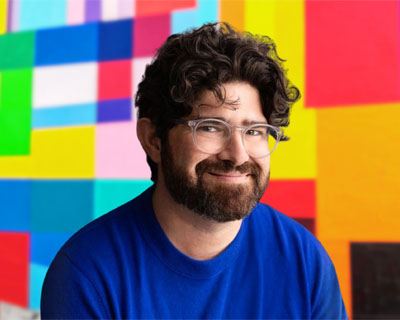
George Newman
The human desire to make a mark on the world has long been a focus for Newman. “My first research project in graduate school was about how young children appreciate that visual order in the world—like a neatly stacked pile of rocks—is a sign that people have been there before,” Newman says. “Only intentional agents are capable of making their world more orderly, which is something we seem to grasp very early on in development.”
One way that humans can reshape their world is through the ideas they bring to life. That’s just one premise of Newman’s new book How Great Ideas Happen, in which he encourages readers to view themselves as archeologists on a dig for ideas and inspiration in their daily lives. He recently shared with AACSB Insights why he thinks we are all far more creative than we give ourselves credit for. His conclusion? Everyone has great ideas to share with the world, if only they take time to discover them.
In your book, you mention that Thomas Edison once said, “There’s no such thing as an idea being brain-born; everything comes from the outside.” Why do you think it’s important for us to adopt Edison’s view of creativity—not as something internal and fortuitous, but as something external that we can practice and develop?
We are not conjuring ideas out of thin air. All ideas, to some degree, build on what exists already and what has come before. For example, where did the idea for the lightbulb begin? Certainly not with Edison. You can trace the evolution of the lightbulb back over 80 years to the arc lamp, and even before then.
But more importantly, thinking about ideas as “brain-born” sends us in completely the wrong direction. We focus inward—waiting for our inner genius to be unlocked—when really, we should be engaging with the world around us: exposing ourselves to new information, engaging in trial and error, collaborating and seeking feedback from others.
You describe the creative process as having four distinct phases: surveying, gridding, digging, and sifting. Which of these phases is the most difficult for people to adopt?
I’d say surveying. Surveying isn’t just about searching; it’s more like doing research to figure out where other great ideas have been found. What do successful solutions even look like in your area? What are their building blocks?
I draw an analogy to archeology: It would be wild for an archeologist to just start digging randomly. Same goes for creativity. If you begin by brainstorming, you’ve made a mistake. You need to do the necessary research and thinking up front.
We are not conjuring ideas out of thin air. All ideas, to some degree, build on what exists already and what has come before.
Relatedly, there is huge value in borrowing from what has worked for others and adding your own unique spin or twist on that idea. I call this the “5 Percent Novelty Rule,” and it describes a lot of successful ideas throughout history.
As part of the gridding process, you advise people to “have a guiding question” that pinpoints what their goals are and why those goals are meaningful. What differentiates an effective guiding question from an ineffective one?
A guiding question acts as your compass. Basically, you are asking “What am I trying to accomplish and who is it for?” Successful guiding questions have several features. They are specific, which means they are phrased in a way that allows you to narrow in on a particular niche area. They are also open-ended, encouraging multiple answers rather than a single correct one.
They are motivating in that they engage curiosity and motivate you to delve deeper. Finally, they are measurable, producing outcomes that help you determine if you’re on the right path.
Your approach has implications for educators who want their classrooms to provide a sense of “psychological safety” so that students feel free to explore different ideas without a fear of failure. How can faculty cultivate it in their classrooms and teach students to create such safety for themselves?
There are several things that they can do to foster it. I’ll focus on two. The first comes directly from Amy Edmondson’s work: She calls it setting the stage. This means that, before you begin the exercise, make sure that everyone is on the same page about what the group is trying to accomplish, and more importantly, why—what’s the bigger purpose behind it? I’m often baffled by how frequently this gets left out of the discussion.
The second is to teach students the importance of separating digging from sifting. This means that students should learn not to evaluate ideas as they generate them. The research shows that if we “sift” (or evaluate) ideas while we “dig” (or generate) ideas, we wind up generating fewer ideas overall. As a result, we are less likely to find something really good.
How should faculty approach grading and assessment on creativity-based assignments, now that they are grading process rather than outcome?
We should be rewarding more digging, more search. Maybe this is something like, “I want to see all the ideas that you considered that you didn’t go with,” and/or “I want to hear your reasoning about why you selected the idea you did.” Refining an idea is itself an important form of creativity. “Show the receipts,” as my students say.
You argue that we tend to take an “inside-out” approach to creativity, where we set goals and then design plans to achieve them. But you advise us to work “outside-in”—first asking how others are likely to interact with our ideas and then planning backward from there. You note that you have used this approach in planning your own courses. How has this affected your teaching?
I started with the question, “What will my students remember a couple years from now?” This led me to make several key changes to my lesson plans.
First, I was focusing too much on theory and the empirical support for those theories. I realized that theories and studies are the way that academics think about these topics, but not how most students do. Eventually they need the theoretical scaffolding but that can’t be the main point of contact for students.
I think of AI like an excavator. It can rapidly mine creative spaces, but people need to know where to dig.
Second, I needed more experiential learning—activities, in-class debates, breakout challenges, and so on. Finally, I needed more concrete examples that connect to their lives and the challenges they face every day.
None of this is revolutionary, but it was an “aha” moment for me when I realized that I had been teaching my class “inside-out” rather than “outside-in.”
As artificial intelligence becomes more pervasive, how can we use the technology to support creative exploration, not supplant it?
The creative benefits of AI depend almost entirely on how you use it. When people employ AI without clear direction—choosing familiar prompts or generic approaches—AI tends to produce boring, homogeneous results. But in the hands of someone who can guide it thoughtfully, AI becomes a powerful tool for expanding creative possibilities.
I think of AI like an excavator. It can rapidly mine creative spaces, but people need to know where to dig. The key is curation: your ability to steer the process, notice promising sparks, and push into new conceptual frontiers.
Your methods are meant to be unhurried and deliberate. But is this always realistic in high-pressure business and academic contexts?
I get this question a lot—essentially, “You argue for a slow creative process, but in today’s environment, time is a luxury that many don’t have.” I disagree. Good ideas are worth waiting for. Some interesting research on consumer products—such as those “Shark Tank”-like ideas—shows that the “back-of-the-napkin” idea is as predictive of a product’s success as the final prototype.
In other words, the real power of an idea is in the initial kernel, that conceptual nugget. And what happens is that most people settle for ideas way too quickly.
For instance, in my own class, I ask my students to form groups and complete a semesterlong research project. After students submit their projects, I ask them how they came up with their ideas. I’m always struck by how most groups finalize their topic during their very first meeting, often within the first few minutes. The majority of their time and effort goes to executing the idea.
But the truth is that what might feel like “wasted time” spent searching is often repaid many times over in the smooth execution that follows. A strong kernel sets the boundaries of possibility, shaping the choices you make as you refine and execute your idea. Taking the time to uncover something extraordinary establishes the foundation from which you propel the rest of your creative process forward.
After studying so many creative individuals for this book, what story or habit has most transformed how you think about your own work as a scholar and teacher?
One of my favorites comes from an artist named Tim Klein. He realized that many jigsaw puzzle manufacturers reuse the same die-cut pattern. Klein discovered that he could swap out pieces from completely different puzzles, combining them to make bizarre, fantastical images. When I asked him about it, Klein told me this: “I often feel not so much like an artist as an archaeologist, reconstructing a shattered picture that has been lying latent for decades, waiting for me to come along and discover it.”
How might faculty introduce students to applying your methods in their lives and careers?
I’ll give one example. I often teach seminars with business executives where we talk about how to communicate values in the workplace. Several years ago, I got the idea to precede our conversation with a trip to the art museum. Now, with the help of experienced and insightful docents, we spend an hour “close-looking”—focusing on and discussing one or two artworks.
What might feel like “wasted time” spent searching is often repaid many times over in the smooth execution that follows.
Initially, executives are hesitant to engage in the exercise, perhaps worried about appearing as if they don’t “get it.” Soon, though, the floodgates open. They start noticing different subtle elements in the painting and making all sorts of interesting connections to their own lives.
But the most remarkable aspect of the close-looking exercise is the effect it has on our conversations once we return to the classroom. Not only are executives more engaged, but now they begin to use close-looking to analyze their approaches to leadership. By scrutinizing their interactions, they notice new details and subtleties in their behaviors and draw new and different connections about what their actions communicate.
You emphasize that, rather than rely on extensive expertise in a particular area, we should become “problem finders,” looking for “gaps and hidden questions that others might miss.” How can we become better at that?
Close-looking can lead people to new, unexplored terrain, but the trick is balancing expertise with still attending closely to the world around us. Think of it like being an experienced fossil hunter. Of course, you need expertise about promising sites—where you should be digging. But then, in the moment, you are carefully attending the ground in front of you, looking for what doesn’t fit or where you can leave your mark.
 Video
Video