






Why We’re Bad at Disagreement—and How to Do It Better
 Podcast
Host Eileen McAuliffe, AACSB's executive vice president of EMEA and chief thought leadership officer, talks with Harvard expert on disagreement, Julia Minson. They explore the root cause of disagreement and the surprising benefits of opening ourselves to opposing views. Their conversation is shaped by three big questions:
- Throughout your book, you talk about naive realism—our deeply held belief that we are fundamentally right—as a common obstacle to more productive conversations. Can you discuss this phenomenon and explain its role in disagreement?
- You argue that the solution to these entrenched beliefs is to develop receptiveness—to open ourselves to other views, especially ones that oppose our own. What are some strategies for developing receptiveness in ourselves and in preparing future leaders?
- Can you explain the HEAR framework and how it signals to others that you are genuinely listening?
Transcript
[00:00] Intro: Welcome to AACSB Pulse, the podcast that tackles critical topics in global business education today, three questions at a time. We talk with deans, industry leaders, and other big thinkers about the trends reshaping education, leadership, and the future of work. AACSB Pulse brings these topics and more into sharp focus. AACSB Pulse: Three big questions. Bold answers Better business schools.
[00:28] Eileen McAuliffe: So welcome. Welcome to AACSB Pulse. Our guest for this episode is an expert on disagreement. Julia Minson is a professor of public policy at the Harvard Kennedy School and author of the new book How to Disagree Better. We’re sure to have a fascinating conversation, and I can’t wait to dive in. Julia, thank you so much for joining us.
[00:49] Julia Minson: Thank you for having me. This is terrific.
Question 1
[00:52] Eileen McAuliffe: And as our listeners know, our show is premised on three big questions. And then sometimes we dive in a bit more detailed. So let’s get started with the first one, shall we?
So throughout your book, Julia, you talk about naive realism, our deeply held belief that we are fundamentally right. This is a common obstacle to more productive conversations. So, can you discuss this phenomenon a little bit more and explain its role in disagreement?
[01:18] Julia Minson: Yeah, absolutely. So naive realism is a term that was imported into psychology from philosophy, right? So philosophers sort of love to debate the nature of reality. And one way of thinking about what’s real is, well, what I perceive is what’s real. And if you think about human cognition, most of the time that’s how we operate.
If you think about our fundamental, like, five senses, right—our physical sensation—you think, well, if it’s hot, I shouldn’t touch it, right? Or if it’s solid, then it’s OK to step on it. We very quickly make judgments based on our physical perceptions that guide our behavior through the physical world. And that works really well because most of the time, we’re making decisions so quickly that we really don’t have the bandwidth to stop and question ourselves.
You just assume that you get it because you’re a smart, rational, reasonable person who mostly gets things right.
[02:11] Julia Minson: But, we apply the same type of reliance on our perceptions when it comes to really complicated interpersonal phenomena and ideas that might be, sort of, very debatable and that other people have different perceptions and different beliefs around. So that’s where naive realism gets us into trouble—when you sort of say, I see the world as it is, but you’re not talking about physical perception. You’re talking about what’s fair or what’s just or what’s the right amount of risk tolerance or what’s an appropriate hiring decision. And you just assume that you get it because you’re a smart, rational, reasonable person who mostly gets things right.
[02:58] Eileen McAuliffe: I mean, I couldn’t agree more with what you’re saying, but here’s something that pings into my mind. You talked about many different types of relationships where these things can happen, but one common one, as a parent, is with a parent and a child. I mean, I have three sons, and quite often my sons will say, but I’m right. For our listeners, some real takeaways would be super. So how do you get through this?
[03:20] Julia Minson: Yeah, so first of all, I have three daughters, so maybe we should introduce them.
[03:24] Eileen McAuliffe: Interesting. Isn’t that fascinating?
[03:27] Julia Minson: Isn’t that funny? I think the thing that’s really interesting with naive realism is that people rely on their own life experience and their knowledge and sometimes sort of workplace data or published data to back up their beliefs. And what’s very interesting to me is that you can have two people, let’s say, at vastly different levels of experience—like a parent and a child or a boss and employee or a graduate student and their advisor—and both sides believe that they’re right and believe that the other side is biased, either by their inexperience or by the fact that they’re old and out of touch and don’t get it anymore, right?
[04:17] Julia Minson: So, to me, the funniest version of this was when my kids were really little and I would try to help them with their schoolwork, and they would say, “No, Mom, that’s not how we do it anymore.” And I would say, “Well, you know, I’m pretty sure that math hasn’t changed.”
You can have two people at vastly different levels of experience ... and both sides believe that they’re right and believe that the other side is biased.
[04:30] Eileen McAuliffe: And I’m sure that resonates with many parents around the world. Let’s twist it back into academia.
So, as a former dean, a culture of debate is central you encourage it. You love the curiosity. I used to love listening and watching and engaging with my faculty when they were actively debating one decision or another. But what do you think about this? Does it impede change in terms of speed and reaching decisions more quickly, do you think?
[05:01] Julia Minson: Yeah, absolutely. You know, when we look at something like debate, constructive disagreement, bringing on a diversity of viewpoints, and we agree that this is a good thing and that we should all be doing it, and then most of the time we’re not doing it, you have to say, well, why aren’t people doing it? Well, because there are, in fact, actual costs.
If you are a leader or if you’re an individual contributor, you can make the decision faster by yourself. Absolutely. If you ask a bunch of people for their views and then you listen to them and then you compare them, that takes time. And I think that’s one of the many reasons why people don’t really engage with opposing perspectives.
[05:48] Julia Minson: Because if naive realism tells you that you’re right and listening to somebody else is going to take twice as much time, then why bother?
[05:58] Eileen McAuliffe: So in my past experience, it’s kind of circumstantial. So if I cast back to being a dean in the time of the pandemic, certain decisions had to be taken without very much discussion. You know, a lot of our listeners will be business school deans, and giving them some advice on how to constructively engage faculty who may be regularly disagreeable to new initiatives, what advice would you give to those deans where you’re dealing with a regular disagreeer? Sometimes they can be called disruptive, sometimes they can be called negative or stuck in the past.
What advice would you give to business school deans for constructively engaging with your faculty on this matter?
[06:42] Julia Minson: So I think there’s two different pieces to it. There is the decision-making benefits of bringing in a perspective that is really different from your own. And whether you go to that trouble, whether you take the time, whether you go through the potential interpersonal discomfort of that encounter depends on two things. One, it depends on how certain you are in your own belief, right?
If you are 100 percent sure that this is the right way to do it, then you do what you’re sure of needs doing, and you skip all the debate around it. Now, that can be risky because a lot of the times we’re 100 percent confident in things that we should not be confident in, right? So that’s one piece of it. And the other piece of it, of course, is how consequential is the decision, right?
[07:33] Julia Minson: So if it’s a trivial decision and you’re very confident, even if you’re wrong, it doesn’t matter because it’s a trivial decision. Right? But if it’s a very important decision, it might be really worth sort of checking yourself and questioning your own confidence and listening to that disagreeable person. Right?
[07:54] Eileen McAuliffe: And there’s times when one can allow the disagreeable person’s decision or viewpoint in order to experience failure. We all learn from failure, right? So sometimes it’s a good place to be to allow the disagreement. And even though you might think this is actually going to fail, there’s a lot of learning comes from failure as well. Let me ask you another question. Do you think there’s more disagreement today than there’s ever been?
[08:21] Julia Minson: I think we are worse at handling it today than we have ever been. And this is a little bit back to your question about the disagreeable colleague. There’s a difference between having a different perspective and expressing it in a way that’s confrontational, disagreeable, escalatory, or disrespectful, right?
I have a very clear definition in my book of what I call constructive disagreement. And it’s any disagreement that makes the parties want to have another conversation.
And a lot of what I talk about in my work is, how do we create cultures of constructive disagreement where everybody can say exactly what they need to say and bring their expertise to bear, but do it in such a way that the conversation really makes you want to have another conversation? So I have a very clear definition in my book of what I call constructive disagreement. And it’s any disagreement that makes the parties want to have another conversation.
[09:16] Eileen McAuliffe: That’s so right. And I think as leaders of business schools—deans, for example, but many colleagues in business schools—can create a more constructive environment for conversations, be they disagreeable or not, if they’re more mindful of the language they’re using to land the concept that they’re trying to land.
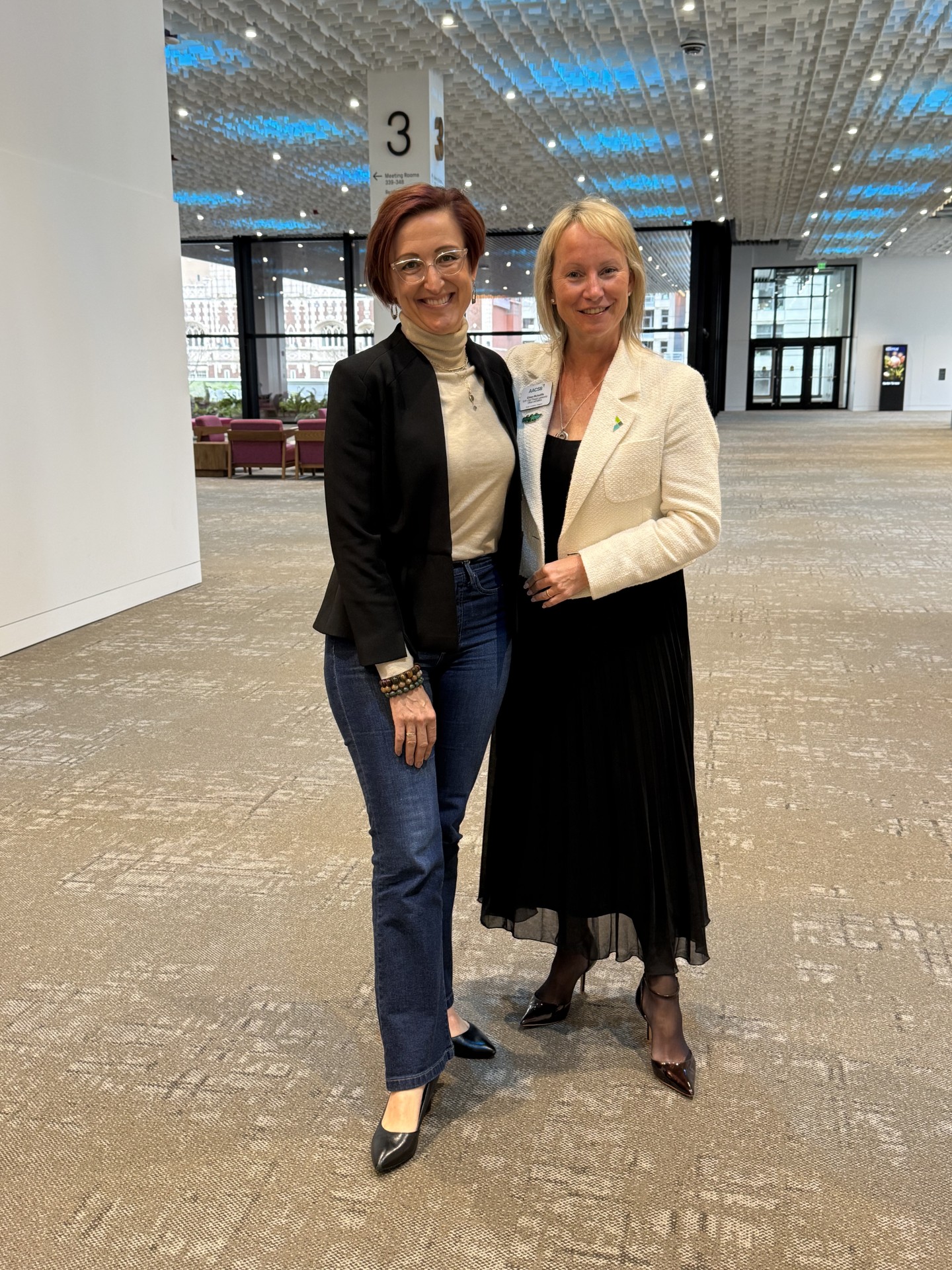
Julia Minson (left) and Eileen McAuliffe
Question 2
[9:39] Eileen McAuliffe: So let’s look at question two. So we’ve identified the problem. You argue that the solution to these entrenched beliefs is to develop receptiveness and to open our minds and ourselves to others’ views, especially ones that oppose ours.
It’s so comfortable to align yourself with people that think and sound and say the same as you. It’s harder to move yourself to the space where you have more disagreement, perhaps. So what are some of the strategies for being and developing receptiveness in ourselves and, from a business school perspective, for future leaders, but also in teams?
[10:19] Julia Minson: Yeah, absolutely. So I think about receptiveness in sort of two different ways right? One way in which I talk about receptiveness in my book is as a habit of mind, right? It is a mindset where you’re habitually looking for information that contradicts your beliefs and you’re thinking hard about that information and you’re trying to evaluate it kind of using the same level of critical scrutiny as information that supports your beliefs.
And that is a hard habit to build and it takes a long time. Part of the reason it takes a long time is because, again, as naive realists, we often don’t think it’s necessary, right? If I’m right, then what is the point of seeking out opposing perspectives and spending all this mental effort trying to think about it?
[11:07] Eileen McAuliffe: And some of those preconceptions are hardwired into us from birth, basically, right?
[11:13] Julia Minson: Well, you know, I’m not a developmental psychologist, so I don’t want to make claims about what is hardwired and what is not. You know, most of us are surrounded by people who believe what we believe, right? Not even necessarily, you know, like right now, we think about that a lot in the political sphere.
But as a child that’s raised in a particular family, I grow up with a mindset, let’s say, about how to manage money, right? I think about, saving is right, and I shouldn’t be wasteful, and I should, you know, look for good deals, and I should kind of put my pennies away. Then when I become a young adult and I start dating, naturally I’m going to gravitate towards people who agree with me because I think that’s the right way to be, right?
[11:59] Julia Minson: So gradually, we sort of construct our own social circles made out of people who believe the same things we believe. And we do exactly the same thing in the workplace, right? We hire people onto our teams who agree with us because we think they are right and they’re smart, and that’s why we hire them. We don’t realize that we’re actually creating an informational silo.
[12:21] Eileen McAuliffe: And this is this kind of conscious, subconscious bias that we have inherent in decision-making?
[12:27] Julia Minson: Yes, absolutely. So psychologists, political scientists call this selective exposure to information, where we selectively expose ourselves to information we already believe. I teach at the Kennedy School of Government, and so we have a lot of policy leaders, nonprofit leaders, government folks, and I remember having a student sort of challenge me in class once who said, “Look, I run an environmental nonprofit. Are you telling me that I need to hire somebody who doesn’t believe in climate change?” And I said, “Well, I don’t know if you should hire them, but you should at least talk to them, right?”
[13:07] Julia Minson: Because you kind of need a, you know, reality check and a sanity check in terms of how likely are you to succeed in your work, how likely are you to find, you know, buy-in and investors and customers for the products you’re creating because you are being driven by a set of beliefs that may or may not be as broadly shared as you would like them to be.
[13:28] Eileen McAuliffe: And that’s what we’re gaining from opening ourselves to opposing views, to different beliefs, and it brings that richness back, right?
So what happens when we’re the only one being receptive and the other party doubles down on their view? You know, it’s kind of like you feel like you’re hitting a brick wall. How do you move?
[13:51] Julia Minson: So, good news: Receptiveness tends to be contagious. We have, you know, we have done studies where we pair people up for conversation, and we can measure their level of receptiveness at the beginning and at the end. And what we find is that by the end of the conversation, the less receptive people become more receptive. I liken it to, like, showing up at the party and realizing you’re wearing the wrong outfit. Like, oh, this is the kind of party where you’re supposed to be receptive? Oh, OK, I’m gonna do that.
Good news: Receptiveness tends to be contagious.
And, you know, I think the other thing that’s really important for folks to ask themselves is, why am I having this conversation? Right? If the other person is being a brick wall, you can learn from them. You can understand their viewpoint.
[14:41] Julia Minson: You, you can say, oh, now I understand what are the objections to my arguments and why it’s not resonating. And then you say, OK, I’m never going to make a dent here. I’m going to go work with somebody else.
[14:54] Eileen McAuliffe: Yeah, it’s really interesting because your presentation and your book have really made me think about my own experiences. And I’m sure lots of our listeners will be reflecting on their own experiences as you’re talking.
But one particular vice chancellor that I had the pleasure of working with, I remember watching a difficult interchange between himself and another colleague, and the other colleague was the brick wall. I’m not moving. I’m right. And the vice chancellor very skillfully said, “You may have that view. I tend to disagree, but let’s move on.” And I thought that was really skillful. He valued the person’s view. They weren’t going to reach a conclusion, but let’s keep moving forward. And I think it was courageous.
[15:34] Eileen McAuliffe: On the notion of courage, do listeners and readers of your book, do they have to develop a sense of courage to be able to be receptive and to kind of develop this sort of approach?
[15:48] Julia Minson: You know, I think a lot of people have fears around these types of conversations because we’re so used to them becoming ugly, right? We can all think of examples of when you had a disagreement with somebody, and it just went very badly. It may have ruined a working relationship, it may have ruined a family relationship. Sometimes it happened in public, and so then it’s also embarrassing. What I have observed in my teaching and sort of in my own work is that if you develop the skills to disagree with receptiveness, it very rarely turns ugly,
[16:29] Eileen McAuliffe: So it doesn’t escalate.
[16:32] Julia Minson: And, you know, for escalation to happen, you need both people to be escalating. If you just absolutely commit to engaging with receptiveness and respect and warmth, the other person can sort of jump up and down all they want; it’s not going to escalate unless you let it.
[16:50] Eileen McAuliffe: Yeah, it really resonates with me, and I’m sure it will with lots of our listeners. But I lead with kindness, and I always say, don’t mistake that for a weakness. It’s not a weakness. I lead with kindness. I have a very open mind, and that is my philosophy.
Question 3
[17:04] Eileen McAuliffe: Let’s move on, because I’m really interested in the research side of your work as well. And we know academics love a framework. We all do. We all love them. But your research has developed, well, from your research, you’ve developed a really great framework that is so easy to apply. And when I hear you explain it, I just think, wow, that is so straightforward.
Can you explain the HEAR framework, H-E-A-R, hearing framework, and what it signals to others that you are genuinely listening to them? So it’s a wonderful acronym.
[17:42] Julia Minson: Yeah, absolutely. So, you know, one of the things that I think comes up often in these types of conversations is that people feel like they have to choose between being receptive and curious and making their own point. And it’s a really hard choice because, in a disagreement, everybody has their own point; that’s why you are in the disagreement.
And people are sort of stifling their own voice and their own set of beliefs in order to preserve harmony. And in some sense that’s unrealistic, right? Because if I’m a colleague and I’m disagreeing with you, I need to say what I came to say.
[18:24] Julia Minson: So the HEAR framework is a set of behaviors that you can deploy in conversation so that even when you’re making your own point, you’re still showing the other person that you’re engaged with their perspective, so that you did all this good work of listening and being curious and asking questions, but you can also state your own views without burning all the bridges.
The HEAR framework is a set of behaviors that you can deploy in conversation so that even when you’re making your own point, you’re still showing the other person that you’re engaged with their perspective
[18:49] Julia Minson: So H-E-A-R. So the H stands for hedging your claims. So the idea is that, whenever you’re in a disagreement, you might want to be very direct and confident, and that’s what we teach in leadership courses, but if you hedge your claims a little bit with words like maybe, sometimes, perhaps, it shows your counterpart that you recognize that, you know, there’s an exception to every rule and the world is complicated, and you’re kind of keeping a little bit of room for their view.
[19:22] Eileen McAuliffe: You’re almost inviting it, right, by using that language.
[19:26] Julia Minson: That’s right. That’s right. So let’s say I might want to say—you know, one of my favorite examples is—I might want to say, “COVID vaccines are safe and effective.” OK, that’s true. But I could also say, “Most physicians tend to believe that COVID vaccines are largely safe and effective.”
[19:41] Eileen McAuliffe: Yeah, it’s a very careful choice of language.
[19:44] Julia Minson: And ironically, it’s a truer statement because it captures the fact that the world is complicated. So the E in HEAR stands for emphasizing agreement. And the idea is that, if we’re in a conversation, most likely it’s because we have some common goal, right? And it’s good to emphasize the things that we agree on before we jump into dissecting the disagreement, right?
So phrases like, “We both want to,” or “I am also concerned with,” or “I agree with part of what you’re saying,” right, sort of puts you on the same side of the table before you jump into, you know, dissecting what the difference really is.
[20:31] Julia Minson: The A stands for acknowledging the other perspective. So this is using words to demonstrate behaviorally that you have really listened to the other person when they were speaking, right?
So phrases like, “I understand you are saying that,” or “it seems really important to you that,” or “I hear that you think X, Y, Z,” right? So I am taking just a few seconds to delay my own opportunity to make my argument and really proving that I was listening a few seconds ago when you were talking.
[21:14] Julia Minson: And finally, the R stands for reframing to the positive. So it’s dropping contradictory and negatively valenced to words like no, can’t, won’t, don’t, terrible, hate, right? And replacing it with more positively valenced words like wonderful, terrific, appreciate, thank you, right? So, you know, I might want to say, “I hate it when people push me into stressful decisions.” Or I could say, “I really appreciate it when people give me the time to consider important decisions.”
[21:51] Eileen McAuliffe: And I’m going to practice this. I really appreciate you sharing all of this. But I want to dive into just a couple more examples for future generations of leaders in the classroom. I have a worry. So many of our young leaders coming through are living day to day with social media and not talking to each other enough, perhaps.
How can we really apply this in the classroom to prepare our students to become these thoughtful, observant leaders in terms of language and constructs of language and seeing things really from another person’s point of view so fulsomely?
People are much more likely to speak up and offer their true beliefs and really advocate for their perspective if they expect it to be met with receptiveness.
[22:34] Julia Minson: Yeah. So one of the things that we’re doing at the Harvard Kennedy School is developing an online course that students have to take before they ever set foot on campus, so that they have some of these skills in their back pocket before they engage in the type of disagreement we want them to engage in the classroom, right? Because I think people are much more likely to speak up and offer their true beliefs and really advocate for their perspective if they expect it to be met with receptiveness.
And so I think there’s sort of a systemic change that happens when everybody in an environment is trained in these skills. It actually creates more debate and more disagreement because there’s an expectation of receptiveness on the other side.
[23:30] Eileen McAuliffe: Julia, I know the time has flown by, and I know I’m eager to apply the HEAR framework to my very next disagreement, which, what I’ll do is I’ll keep in touch with you and see how it’s working.
[23:41] Julia Minson: OK, OK, I would love that.
[23:42] Eileen McAuliffe: But I hope listeners take something away from this as well and really try and practice the tools and the philosophy that you have written about, which is fascinating. We could all do with a bit more understanding in this world today and less disruption or disagreement. So I think your approach is so timely, and thank you for taking the time to share your insights with us today.
[24:09] Julia Minson: Thank you. It was my pleasure, Eileen.
[24:10] Eileen McAuliffe: To our listeners, if you have enjoyed this conversation, be sure to follow AACSB Pulse on AACSB Insights, Apple, Podbean, or Spotify. We’ve got more great episodes coming up on the biggest issues shaping business education today.
About AACSB Pulse
A podcast produced by AACSB International, AACSB Pulse explores current topics impacting global business education—three questions at a time—with business school deans, industry leaders, and other big thinkers of today.
To receive new episodes, make sure to sign up for AACSB’s email newsletter, LINK, or subscribe to AACSB Pulse on Apple Podcasts or Spotify.
 Article
 Video
Video