


System Update Complete: To access your AACSB account, please visit my.aacsb.edu and set up your new password.

Teaching Effectiveness and Impact Seminar (Orlando)

Strengthen teaching effectiveness through the integrated application of AACSB Standards 3 and 7.

Seminar

17 Oct
Teaching Effectiveness and Impact Seminar (Orlando)
Register for Seminar
Quality and Impact

Program Overview

This AACSB Academy seminar focuses on how business schools define, enable, evaluate, and evidence teaching effectiveness and impact through aligned institutional systems and faculty practices. Participants develop the ability to interpret and apply expectations for teaching effectiveness within the AACSB Global Standards, with particular emphasis on the integration of Standard 7 (Teaching Effectiveness and Impact) and Standard 3 (Faculty and Professional Staff Resources). 

Why This Seminar Matters

Teaching effectiveness is not only about classroom practice. It is shaped by institutional design, how schools define faculty roles, set expectations, allocate workload, and evaluate performance. As schools implement the AACSB Global Standards for Business Education™, defining faculty qualifications and expectations (Standard 3) becomes a critical lever for enabling teaching effectiveness (Standard 7). 

This seminar helps participants ensure teaching effectiveness and impact are: 

  •  Measurable  
  •  Credible  
  •  Sustainable  
  •  Embedded within faculty systems and decision-making  

Learning Objectives

By the end of this seminar, participants will be able to: 

  •  Interpret and apply teaching effectiveness expectations within the AACSB Global Standards in a way that reflects institutional mission and context  
  •  Design or refine faculty qualification definitions that explicitly incorporate expectations for teaching effectiveness and impact  
  •  Align faculty roles, deployment, and workload models with differentiated teaching expectations  
  •  Evaluate whether faculty review, promotion, and reward systems reinforce teaching effectiveness  
  •  Distinguish between teaching activities, effectiveness, and impact, and identify appropriate evidence to support evaluation  
  •  Diagnose gaps and design improvements in institutional approaches to teaching effectiveness and impact  

Facilitators

Stephanie Bryant PhotographStephanie Bryant, AACSB International

Dr. Stephanie M. Bryant is the Executive Vice President and Global Chief Accreditation Officer of AACSB International.  She served as Dean of the College of Business at Missouri State University for 6-1/2 years and was previously the Director of the University of South Florida School of Accountancy.  She received her Ph.D. and B.S. in Accounting from Louisiana State University and is a Louisiana CPA (inactive).  Dr. Bryant specializes in accounting information systems, and previously worked for KPMG Peat Marwick.  Dr. Bryant has co-authored two accounting textbooks, and over 30 academic articles and has won nine teaching awards.  She served as the 2005-2006 national President of the American Accounting Association Information Systems Section.  She also served as the 2006-2009 International President of Beta Alpha Psi.
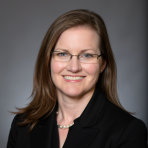
Barbara RitterBarbara Ritter, The University of Toledo

Barbara Ritter is dean of the Neff College of Business and Innovation at The University of Toledo. She earned her PhD in industrial organizational psychology in 2004 from the University of Akron. Working under the tutelage of Robert Lord, Ritter studied and published in the area of implicit leadership theory, gender, and justice. In these fields, and in the area of management pedagogy, Ritter has more than 100 presentations and publications in outlets such as the Journal of Applied PsychologyHuman Relations, and Journal of Business Ethics. Prior to joining the Neff College, Ritter served as dean of the Wall College of Business at Coastal Carolina University for seven years before becoming dean at Jacksonville University in 2020. Ritter is an elected member of the AACSB Board of Directors and co-chair of the Eligibility Committee. She has previously served on the AACSB Initial Accreditation Committee and on the boards of Beta Alpha Psi, the Southern Business Academic Administrators, and Beta Gamma Sigma. She also served as division chair for the Academy of Management, Management Education and Development Division, and as an associate editor for Organizational Management Journal. Ritter is a recipient of a number of awards, including the Management and Organizational Behavior Teaching Society (MOBTS) Peter Frost Mentoring Award, which acknowledges individuals who are distinguished as gifted teachers and scholars and who unselfishly impart these gifts through mentoring students, colleagues, and associates. In 2020, Ritter was recognized by MOBTS with the David L. Bradford Outstanding Educator Award, which acknowledges a person with consistently demonstrated achievement over a lifetime, focusing on teaching and learning excellence, and in 2024 was awarded the Susan B. Herman Service Award which recognizes outstanding service above and beyond the call of duty, identifying and thanking those whose contributions represent the epitome of altruism, enthusiasm, and selflessness across management education.

Contact Us

For more information, please contact [email protected]

Event Bundles

Packages of this event and others are available for a discounted price per attendee.

Bundles
Deans Conference
19​ – 21​ October 2026
2,440 USD/attendee
Save 200 USD
Register for Bundle
Deans Conference
19​ – 21​ October 2026
3,285 USD/attendee
Save 300 USD
Register for Bundle


Pricing (USD)
Member Pricing
By 21 September
945 USD
On or after 22 September
1,095 USD
Non-Member Pricing
By 21 September
1,245 USD
On or after 22 September
1,395 USD
On-Campus Workshop Pricing
Bring AACSB content to your team in a virtual or in-person private workshop, at a fixed price. Learn more
AACSB Academy
A comprehensive suite of learning opportunities for competency development based on AACSB’s global standards. Programs build attendees’ knowledge and abilities in leadership, faculty success, and quality impact with an underlying focus on frontier knowledge and competency-building.