



A Practical Guide to Global Business Competitions
 Article
- Global competitions expose students to higher stakes than national or regional competitions, and they offer schools opportunities to build relationships with other institutions.
- Schools can encourage student participation by covering competition expenses, offering mentoring support, making competitions part of the academic experience, and enlisting alumni as recruiters.
- Participating schools receive valuable feedback from international judges who highlight gaps in the curriculum, which schools can later address to strengthen their programs.
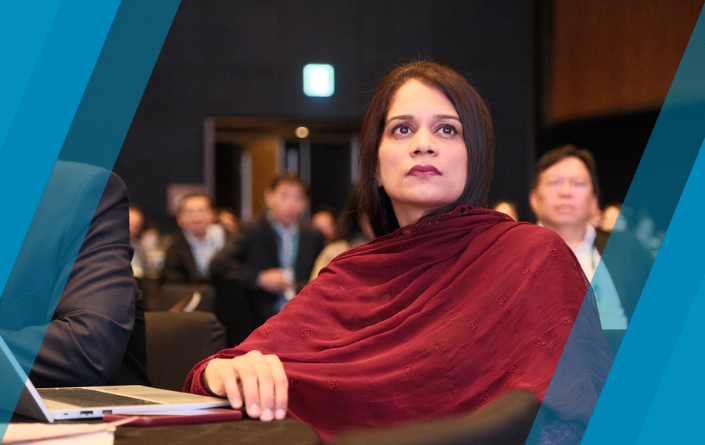
Picture this: Undergraduate students from a British university are in Amsterdam, standing in front of a panel of international executives who are judging a competition involving schools from across Europe. Not only do the students end up winning an international award, they gain valuable experience and make vital industry connections.
This happened earlier this year to a team of students from Manchester Metropolitan University (MMU) in the U.K. While exciting, it wasn’t a one-off or random event. It was the product of a deliberate, structured approach to competition-based learning that we have spent four years building at the university’s Faculty of Business and Law. And it is an approach that any school can replicate.
Why Global, Not Just Local?
While regional and national competitions offer real value, they operate within familiar bubbles. Students benchmark themselves against peers from similar educational backgrounds, with whom they often share unquestioned cultural assumptions and analytical frameworks.
But when teams compete in global competitions, they cannot simply devise solutions that meet local standards. They must prove themselves before judges who bring perspectives from international industries and markets.
The stakes are also different. Because global competitions feature time pressures, diverse judging panels, and high-stakes feedback, students develop skills such as resilience, adaptability, and the ability to deliver results under pressure. Those capabilities have been identified by the World Economic Forum’s Future of Jobs Report 2025 as the ones that will most differentiate graduates who hope to be in growth roles by 2030.
The outcomes we have seen at MMU reflect this. Between 2021 and 2025, students who competed in global events were 11 percent more likely to be employed within six months of graduation. They also were nearly 12 percent more likely to achieve first-class or upper-second honors, compared to sector benchmarks from the Graduate Outcomes survey 2022-23 prepared by the Higher Education Statistics Agency.
Finding the Right Competition
The first step in choosing the right global competition for your school is matching the event to your students and your institution’s strengths. Ask three questions before you commit:
Does the format match what our students are learning? Case competitions work well for strategy and management programs. Business plan competitions fit entrepreneurship courses. Specialist events, such as STR Data Analytics competitions in hospitality, align directly with sector-specific skills and create clear pathways to industry employment. Although some competitions are dedicated to specific fields, most are best suited to multidisciplinary teams.
Which students are we targeting? It’s essential to match the challenge to your cohort. Competitions such as the European Mise en Place Cup (EMCup) in Amsterdam, the International Case Development Competition (ICDC) in Cairo, and the CBS Global competition in Denmark are open to undergraduates and postgraduates. Other events are pitched specifically at MBA students or students who have never participated in previous competitions.
Competitions are not just student events. They are international relationship vehicles rooted in shared educational practice rather than recruitment pipelines.
What partnerships do we want to build? Competitions are not just student events. They are relationship vehicles. At MMU, we have developed long-term research collaborations, staff exchanges, and curriculum alignment projects with institutions we first met through competition networks in the Americas, Europe, Asia, and Africa. These durable international partnerships are rooted in shared educational practice rather than recruitment pipelines.
Instead of focusing all your energy on one prestigious event, consider building an ecosystem at different levels. This creates multiple entry points, allows for diverse forms of capability development, and broadens your institutional network over time.
Sparking Student Interest
When sending teams to international competitions, the biggest mistake you can make is waiting for students to self-select. Students who already feel confident will come forward. Everyone else will wrongly assume the competition is not for them.
At MMU, we broadened our intake by creating explicit pathways for four groups: academic high performers, students who have demonstrated resilience under difficult personal circumstances, students who have showed creative thinking in their coursework, and students whose cultural or professional backgrounds would strengthen team dynamics.
That last group matters more than many schools realize. Cross-cultural collaboration is not a soft outcome; it is an analytical advantage in international competition settings. Diverse teams often outperform more homogeneous ones because they are resilient and adaptable. According to research on experiential simulation learning published in Studies in Higher Education, those qualities are the attributes that graduate recruiters most value and find hardest to screen for.
We take four additional steps to encourage student participation. First, we cover all expenses related to training, competition fees, flights, food, and accommodations, so the experience is free for all students. Second, we offer nonfinancial support, such as mentoring from senior managers from within and outside higher education.
Third, we make it clear the competitions are part of the academic experience. When students have to miss classes, they are marked as being “on university business,” although they are expected to catch up on any work they’ve missed. When competitions affect coursework, students are given extensions to complete assignments.
Finally, we ask alumni, particularly those who formerly participated in competitions, to serve as recruiters. They might offer short talks, hold informal Q&As with current students, or write brief accounts of their experiences. Nothing beats a recent graduate saying, “I got my job because of this.”
As a result of these efforts, our participation grew from 29 students in 2021 to 189 in 2025, with international student involvement rising from nine to 62. Of the overall group of students who express an interest, about 38 will participate in competitions during any given year. To identify this group, we invite interested students to come to interviews where they prepare and present solutions to short cases. After attending a short training program, these students participate in another round of case solving before we determine our final 38.
Occasionally, when last-minute opportunities arise, we look beyond that core group to find additional students who are ready to compete. If students decide they don’t want to compete after all, we replace them with reserves.
Cross-cultural collaboration is an advantage in international competitions. Diverse teams often outperform homogeneous ones because they are resilient and adaptable.
To prepare students for competition, we hold boot camps and mock sessions and train students in general theories. Once we have identified the students we will send to particular competitions, we give them more targeted training.
For the majority of competitions, we send one experienced student to lead three inexperienced ones so the new ones can learn from an old hand. However, for the most challenging events, we usually send the most experienced competitors. As those in their final years leave the school, they are replaced by new students, which allows us to create a pipeline of new and veteran competitors.
Getting Faculty on Board
Faculty engagement is the hinge point. Without it, competition programs become the personal project of one or two enthusiasts, which is neither sustainable nor scalable.
There are two effective arguments for getting faculty involved in international competitions. One is that the relationships they build with international partner institutions will be among the most productive professional connections many of them will make.
But the second and broader argument is that competitions strengthen the curriculum. Faculty who advise competition teams receive direct, structured feedback from international industry judges on how students perform, which analytical frameworks are missing, where communication breaks down, and what implementation thinking looks like at an international standard. That feedback highlights the gap between what students are taught and what they can do under pressure. Such information can drive curriculum improvements, which is especially valuable for schools striving to achieve or maintain AACSB accreditation.
To get faculty interested in international competitions, start small. Ask one or two willing colleagues to co-advise a single team for one competition. Faculty who go through the experience once almost always want to repeat it. As more faculty become involved, your school can participate in more competitions. At MMU, the number of competitions we enter has risen from two in our first year to 15 in 2025.
Securing Funding
Entry fees and travel costs are real barriers for schools that want to participate in international competitions. You can take four steps to overcome them:
Make the internal business case. Finance committees respond to evidence, so quantify what you expect, whether that’s graduate employment outcomes, degree classification improvements, or employer engagement opportunities.
Invite industry partners to become sponsors. Frame competition support as meaningful brand access: Sponsored teams present employer names to international academic networks, generate social content that reaches audiences that traditional recruitment advertising does not touch, and create direct pipelines to high-performing graduates. In our experience, hospitality and professional services firms are particularly receptive to this framing.
Explore consortium models. Several competitions allow institutions to share preparation infrastructure and entry costs while competing separately. Building relationships with peer institutions through competition networks can open doors to joint grant applications and shared coaching resources.
Ask competition organizers about bursaries for first-time entrants. Many international events want to increase geographic diversity, so they offer financial support to new participants.
Dealing With Common Challenges
Going global for the first time is disorienting. The first years can be particularly difficult if you underestimate these three dimensions:
The gap between academic and competition formats. Students who excel in coursework often underperform in their first competitions. Academic writing and competition presentation are genuinely different skills. Help students prepare through mock competitions that include external judges so students have experience receiving realistic feedback. One student recently reported that competition experience “translated perfectly to a corporate environment” precisely because it required structured thinking under pressure in a way that coursework rarely replicates.
Global competitions are not just designed for well-resourced schools with established reputations. They are accessible and impactful for institutions at every stage of internationalization.
The psychological stress of a high-pressure international environment. Some students freeze; others thrive in ways that surprise everyone, including themselves. To prepare students for the emotional experience, role-play adversarial Q&As, simulate time pressures, and discuss how to recover from a poor round. This preparation can be the difference between a team that collapses in round two and one that builds momentum across a competition.
Logistical elements. Visa requirements, accessibility needs, dietary considerations, and the administrative load of international travel all can derail preparation if left until late. It’s best if a dedicated professional services colleague or experienced alumni volunteer handles logistics so faculty can focus on academic coaching.
Generally speaking, you should expect to learn more than you win during the first couple of years. The goal is building your team’s experience base, establishing your institutional presence, and identifying how you need to improve your preparation model. Universities that adjust their preparations almost always see dramatically better results when they return in successive years.
Building a Preparation Model That Lasts
Once you have decided to participate in global competitions, the most important structural decision is whether to treat preparation as a standalone program or embed it into the curriculum. We recommend embedding it.
Our model runs over six to 12 weeks. Early phases cover analytical frameworks and include mock rounds with external feedback. Middle phases involve knowledge exchange sessions with international partner universities and inter-institutional practice competitions. Final phases provide format-specific preparation, with scaffolding progressively withdrawn as student capability grows. Experienced students coach new competitors through practice rounds so we don’t have to rely heavily on faculty input or start from scratch with every cycle.
When feedback from judges identifies recurring gaps in our curriculum, we redesign modules to address them. For instance, competition feedback indicated our students needed stronger skills in stakeholder analysis and implementation planning, so we revised our strategic management modules and our capstone module. Not only did the competition performance of subsequent cohorts improve, but our overall curriculum was strengthened.
Start Somewhere
Global competitions are not just designed for well-resourced schools with large international offices and established reputations. They are accessible, scalable, and impactful for institutions at every stage of internationalization. AACSB’s own research on experiential learning makes the same point: The gap between academic preparation and employer expectations is real and growing, and schools close it through high-impact activities that develop capability under authentic conditions.
To any school just getting started, we would suggest taking these first steps toward developing an internationalization module: Identify one competition that aligns with your strengths and students. Find two willing faculty members to co-advise. Recruit a diverse team of 10 to 12 students. Build a six-to-eight-week preparation structure that includes at least one external practice round. Then go.
The question is not whether your students are ready for the global stage. It is whether you are ready to put them on it.
 Video
Video