





People and Places: February 2026
 Article
Transitions
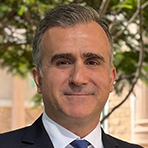 Last month, Assaad Farah was appointed as the next provost and chief academic officer of the American University in Dubai (AUD). He was recently named the university’s interim provost in August 2025. Before that, Farah was dean of the School of Business, where he led the launch of several new programs, including AUD’s newest BBA in artificial intelligence in business, a joint program with Manchester Metropolitan University. He has also served AACSB in many capacities, including as past chair of the Middle East and Africa Advisory Council. Applications are currently open to fill the position of dean at the School of Business. Last month, Assaad Farah was appointed as the next provost and chief academic officer of the American University in Dubai (AUD). He was recently named the university’s interim provost in August 2025. Before that, Farah was dean of the School of Business, where he led the launch of several new programs, including AUD’s newest BBA in artificial intelligence in business, a joint program with Manchester Metropolitan University. He has also served AACSB in many capacities, including as past chair of the Middle East and Africa Advisory Council. Applications are currently open to fill the position of dean at the School of Business. |
 Susan Fournier, who has served as dean of the Questrom School of Business since 2018, will step down from her role on 30 June and retire from Boston University (BU) at the end of the calendar year. As a dean who prioritized academic innovation and student employment outcomes, Fournier oversaw the creation of an online MBA during the COVID-19 pandemic—which now enrolls more than 2,000 students annually, introduced several new master’s programs, and led a multiyear curriculum redesign process. She also championed sustained investments in faculty and staff, which included cross-departmental hiring, expanded leadership and governance opportunities for non-tenure-track faculty, and incentives for interdisciplinary research clusters. Before joining Questrom, Fournier was on the faculty at Harvard Business School. Additionally, she has served on the AACSB Board of Directors since 2023. BU plans to appoint an interim dean for the 2026–27 academic year, with a national formal search to follow. Susan Fournier, who has served as dean of the Questrom School of Business since 2018, will step down from her role on 30 June and retire from Boston University (BU) at the end of the calendar year. As a dean who prioritized academic innovation and student employment outcomes, Fournier oversaw the creation of an online MBA during the COVID-19 pandemic—which now enrolls more than 2,000 students annually, introduced several new master’s programs, and led a multiyear curriculum redesign process. She also championed sustained investments in faculty and staff, which included cross-departmental hiring, expanded leadership and governance opportunities for non-tenure-track faculty, and incentives for interdisciplinary research clusters. Before joining Questrom, Fournier was on the faculty at Harvard Business School. Additionally, she has served on the AACSB Board of Directors since 2023. BU plans to appoint an interim dean for the 2026–27 academic year, with a national formal search to follow. |
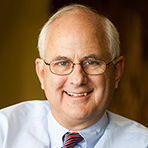 On 2 February, Douglas D. Anderson announced he will step down as dean of the Jon Huntsman School of Business at Utah State University. He will conclude his deanship at the end of the academic year and return to the faculty. Since Anderson began his deanship in 2006, the school has seen an enrollment growth of almost 50 percent and expanded the number of faculty endowments—from an initial two to now 18. He also secured funding to build new facilities, including a 4 million USD renovation of the George S. Eccles Business Building, the 52 million USD creation of Jon M. Huntsman Hall, and, most recently, the 2025 opening of a 32 million USD building that is home to the Huntsman School’s experiential learning programs. On 2 February, Douglas D. Anderson announced he will step down as dean of the Jon Huntsman School of Business at Utah State University. He will conclude his deanship at the end of the academic year and return to the faculty. Since Anderson began his deanship in 2006, the school has seen an enrollment growth of almost 50 percent and expanded the number of faculty endowments—from an initial two to now 18. He also secured funding to build new facilities, including a 4 million USD renovation of the George S. Eccles Business Building, the 52 million USD creation of Jon M. Huntsman Hall, and, most recently, the 2025 opening of a 32 million USD building that is home to the Huntsman School’s experiential learning programs. |
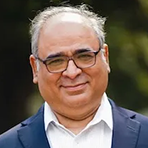 Vikas Anand has been selected as dean of the Grossman School of Business at the University of Vermont. Anand has spent the last four years at North Carolina State University in Raleigh, where he served as the associate dean for academic programs for the Poole College of Management. Before that, he was the executive director of MBA programs and graduate innovation, chair of the management department, and the executive director of the George W. Edwards III Career Center at the University of Arkansas (U of A). During his tenure at the U of A, Anand helped design and launch a reimagined MBA curriculum and new master’s programs to emphasize experiential learning. As dean at the Grossman School, Anand will succeed Sanjay Sharma, who has held the role since 2011. Vikas Anand has been selected as dean of the Grossman School of Business at the University of Vermont. Anand has spent the last four years at North Carolina State University in Raleigh, where he served as the associate dean for academic programs for the Poole College of Management. Before that, he was the executive director of MBA programs and graduate innovation, chair of the management department, and the executive director of the George W. Edwards III Career Center at the University of Arkansas (U of A). During his tenure at the U of A, Anand helped design and launch a reimagined MBA curriculum and new master’s programs to emphasize experiential learning. As dean at the Grossman School, Anand will succeed Sanjay Sharma, who has held the role since 2011. |
 Colin Higgins has been named the next dean of La Trobe University Business School in Melbourne, Australia. He joins La Trobe from Deakin University, where he currently serves as deputy dean of the university’s Business School. Higgins was selected for the role of deputy dean following a four-year term as associate dean (international) for the Faculty of Business and Law, a position he held concurrently with the role of head of the Department of Management. He will begin his deanship on 1 July, taking over from acting dean and professor of economics, Suzanne O’Keefe. Colin Higgins has been named the next dean of La Trobe University Business School in Melbourne, Australia. He joins La Trobe from Deakin University, where he currently serves as deputy dean of the university’s Business School. Higgins was selected for the role of deputy dean following a four-year term as associate dean (international) for the Faculty of Business and Law, a position he held concurrently with the role of head of the Department of Management. He will begin his deanship on 1 July, taking over from acting dean and professor of economics, Suzanne O’Keefe. |
New ProgramsThe University of Deusto Business School in Spain is introducing a master’s program in sustainability management at the school’s Bilbao campus. The program is designed to develop responsible, purpose-driven leaders through a blend of real-world case analysis, experiential workshops, and hands-on projects with sustainability practitioners. Classes will begin in September 2026. The Smeal College of Business at The Pennsylvania State University has announced a new graduate degree that will deliver a business-first approach to artificial intelligence. The two-year cohort-based program is tailored for mid-career professionals and is offered in a flexible hybrid format that blends live online classes with twice-yearly in-person residencies at Penn State’s University Park campus. The Master of Applied AI for Business Transformation will equip participants to harness prebuilt AI models for workflow optimization, strategic decision-making, and value creation—while emphasizing ethics, accountability, and business alignment. The first cohort will enroll in fall 2026. Georgetown University’s McDonough School of Business in Washington, D.C., has redesigned its MBA program to enhance the existing curriculum to meet evolving market demands and increase personalized study opportunities for participants. The refreshed curriculum draws on discussions with alumni, industry partners, and the broader McDonough community to inform the program’s core emphasis on artificial intelligence and digital literacy, ethics, and “essential power skills,” including leadership, communication, and decision-making. After the opening term, students will be able to tailor their education by selecting the timing and focus of core and elective courses to align with their professional interests. Elective options cover high-growth fields like AI, sustainability, global health, entrepreneurship and innovation, and international business. At the program’s conclusion, students participate in a weeklong global trip during which they present research findings to consulting clients. Corvinus University of Budapest is expanding its postgraduate academic offerings at the university’s Hungary campus with the launch of 10 new master’s programs. All the new programs will be taught entirely in English and are categorized under three interest areas: management, innovation and entrepreneurship, and politics and economics. Students enrolled in the new MSc in artificial intelligence in business will gain a fundamental understanding of AI technologies and methodologies and the strategic insight to evaluate, design, and deploy AI solutions that deliver measurable business value. In addition, the MSc in strategic project management will expand on Corvinus’ two-year MSc in management program to prepare students for roles that require them to understand stakeholder needs and optimize workflows in diverse environments. The other master’s programs will focus on international sport business; intellectual property management; agile entrepreneurship; design, business, and society; digital innovation; health economic evaluation; global development policy; and climate policy and regional development. The new degree programs can be completed in one year, with courses scheduled to begin in September. Starting in September 2027, the University of Toronto’s Rotman School of Management will offer a new 15-month Master of Management Analytics–AI (MMA–AI). The new program builds on the existing Master of Management Analytics program and adds leadership and strategy courses specifically designed for the AI context. The program is tailored to working professionals with three to 10 years of experience in business, technology, or data-driven roles, empowering participants to bridge the gap between technical innovation and strategy. The MMA–AI will be delivered in a hybrid modality, with two online classes per week—held in the evening hours to accommodate students’ work schedules—and four in-person modules at the school’s Canada campus. Singapore Management University has launched a new Master of Science in Business AI program, developed in close alignment with industry needs in Singapore and across Asia. The curriculum will use a business-first approach to increase participants’ technical literacy and their confidence to drive change in an AI-augmented economy. The seminar-style pedagogy will cover topics including human–AI collaboration, data storytelling, change management, and innovations and operations in intelligent online marketplaces. Learners can complete the degree program in 12 months on a full-time basis, with a maximum duration of a year and a half. CollaborationsThe Drucker School of Management and the Center for Information Systems and Technology at Claremont Graduate University (CGU) in California have announced an intention to partner with Macnica, a Japan-based service and solutions company, to deepen collaboration at the intersection of AI and society. The strategic collaboration will explore the development of student engagement initiatives—including workshops, seminars, internships, and other hands-on learning experiences—and professional and executive education programs. The partnership will also encompass joint research projects and the establishment of an AI for Humanity Research Institute at CGU. The institute is envisioned as a platform to advance research, education, leadership development, and applied innovation.EAE Business School Barcelona in Spain and Beijing Normal-Hong Kong Baptist University signed an academic cooperation agreement to enhance educational opportunities and strengthen faculty development. Together, the schools will establish exchange opportunities for students and faculty and explore shared academic programs aimed at advancing international learning experiences between Europe and Asia. The agreement has an initial term of five years. Grants and DonationsThe University of North Texas (UNT) has received the largest scholarship gift in its history: a 20 million USD gift from the estate of anonymous longtime donors, including a UNT alumnus. The money will fund the creation of full cost-of-attendance scholarships for undergraduate students at the G. Brint Ryan College of Business who demonstrate strong academic performance, leadership, and community involvement. The estate gift is also part of the Better Look North campaign, the university’s 100 million USD student success campaign. The fundraiser focuses on removing barriers to degree completion and equipping students with resources and opportunities to thrive in college and their careers. The Laidlaw Foundation and IESE Business School are partnering to expand the scope and reach of the institution’s MBA program. The foundation recently committed over 2 million EUR (more than 2.3 million USD) to establish the Laidlaw Women’s MBA Scholarship Program. Starting in September 2026, the program will award 13 full-tuition scholarships to outstanding women who demonstrate exceptional academic and leadership potential and financial need. It will provide the students with access to personalized career counseling and allow them to participate in specialized networking events and hands-on impact projects focused on sustainability and social responsibility. IESE also announced that the institution will match the contribution from the Laidlaw Foundation to ensure full tuition funding for each scholar, bringing the total funding to 4 million EUR (4.7 million USD). The agreement runs through the 2026–29 academic years, with the possibility of renewal. IESE has five international campuses in Barcelona, Spain; Madrid; Munich; New York; and São Paulo. If you have news of interest to share with the business education community, please submit press releases, relevant images, or other information to AACSB Insights via our online submission form at aacsb.edu/insights/articles/submissions/guidelines. |
 Video
Video