


 Educators
 Businesses
Associate Deans Conference
 Conference










The role of the Associate Dean is a high-wire balancing act of rapid problem-solving, strategic diplomacy, and damage control. When an emergency email/text/call comes in, there is rarely a manual. This interactive session transforms institutional chaos into a collaborative masterclass through "Crisis Roulette." Working in collaborative teams, participants will stress-test their problem-solving skills, pitch their mitigation frameworks, and crowdsource proven, real-world solutions from peers who have survived the trenches. You will walk away with a collaborative toolkit of rapid-response checklists, fresh leadership perspectives, and a strengthened network of peer administrators to lean on when the next real-world dumpster fire begins.
We will discuss the challenges and opportunities with scaling corporate partnerships, with a focus on experiential learning. Table topics will include: Managing Faculty/Staff Workload, Sourcing Corporate Projects, and Integrating AI & Technology into Project Scopes.
AACSB’s New Global Standards introduce an important new expectation: business schools must explicitly incorporate teaching effectiveness into faculty qualification criteria. This session examines the implications for faculty classification, evaluation, development, and governance. Participants will share practical, mission-aligned approaches to defining teaching effectiveness, selecting appropriate evidence, integrating expectations into qualification and review processes, and linking outcomes to professional development. Through examples and discussion, the session will also address measurement, faculty engagement, governance, documentation, and strategies for implementing this requirement in a meaningful and sustainable way.
Associate deans live in a constant juggle of deadlines, faculty requests, and back-to-back meetings and many of us are already experimenting with generative AI to carry some of that load. This session seeks to bring super users and newcomers together to learn from each other. We'll kick things off with a few workflow examples such as auto-generating task lists, converting retreat notes into visual recaps, and comparing faculty-qualification policies against the 2026 AACSB standards, but the real value comes from the room. Participants share what's working, what isn't, and walk away with a crowd-sourced toolkit of prompts, simple workflows, and a policy-alignment checklist built by and for associate deans.
Once you have checked in and received your conference badge, join us in the Arizona Ballroom XI, XII, XIII, XIV for lunch and networking ahead of the first session. Participation in this luncheon is limited to registered Solutions Summit attendees.
Kick off the afternoon with insights into the purpose of the Summit and what to expect, followed by Lightning Talks — dynamic, high-impact sessions designed to spark ideas and showcase innovative products, services, and solutions for business schools.
Lightning Talk Session 1: Cengage Learning - Shaping the Future of Learning to Keep Up with the Future of Work
Business schools face a growing challenge: preparing students who are truly career-ready. As AI, data, automation, and workplace expectations evolve, students need more than foundational knowledge—they need to think, communicate, and solve problems like professionals. In this session, Cengage will demonstrate how its learning platforms connect coursework to real-world business scenarios while building critical thinking and responsible AI skills. Discover how prebuilt assignments and proven learning paths support instructors without sacrificing rigor, and how Cengage Unlimited streamlines access across the business school, creating a consistent learning experience that benefits students, faculty, and institutions alike.
• Speaker: Rebecca Ritter, National Director, Solutions Sales, Cengage Learning
Lightning Talk Session 2: Capsim - Discern, Diagnose, Deploy: Building Judgment in an AI Age
Capsim’s simulations give students a proving ground to build critical business judgment—situations where AI can draft the analysis, but human insight must supply the answer. Modern employers are looking for graduates who can transform information into effective decisions under uncertainty, discerning what is reliable and taking responsibility for the outcome. Discover how Capsim moves beyond passive learning to provide the consequential environment students need to build judgment and make the final call.
• Speaker: Bob McDonald, Director of Global Engagement, Capsim
Lightning Talk Session 3: Schoolyear - Bringing Exams Back Without Moving Assessment Backwards
Administrators face a dual challenge as schools have returned to supervised classroom exams: safeguarding academic integrity against AI-driven misconduct while ensuring assessments reflect real-world business environments. Drawing on real-world case studies, we will examine how leading business schools successfully run secure, supervised exams that allow students to work inside authentic professional software—without compromising integrity or inflating administrative burden.
• Speaker: Jeroen Hock, Regional Director, Schoolyear
Business schools are under growing pressure to strengthen career readiness, employer engagement, and measurable student outcomes. This interactive session brings together leaders from AACSB business schools to discuss how they are embedding scalable, industry-integrated learning directly into the undergraduate business degree. Associate Deans and business school leaders from across institutions will share practical examples, lessons learned, and strategies for building institutional buy-in, scaling workforce-aligned innovation, and evaluating impact across key student success metrics. Attendees will leave with actionable ideas and adaptable frameworks for implementing career-connected learning models on their own campuses.
The session will provide a practical roadmap for embedding AI capabilities across curriculum, helping institutions prepare graduates to thrive in an AI-driven world. Join us as we explore Digital Agility, a framework that combines durable human skills, AI literacy, ethical decision-making, and effective human-AI collaboration. Drawing on current workforce and higher education research, we will discuss how institutions can equip students to think critically, evaluate AI outputs, and adapt as technology evolves.
Quinncia is a career readiness platform designed to support students preparing for the job market. With tools to support resume development, interview prep, LinkedIn, career exploration, and networking skills, Quinncia has been transformational for business schools. Being Higher Education focused, this team knows the best strategy for student engagement is through the curriculum and the most valuable commodity for serving students successfully, and at scale, is actionable data. In this session, you'll learn how to help students articulate key job skills and quickly identify those who need extra support.
Relax and enjoy the company of your colleagues as you unwind and continue the day’s discussions in a more informal setting. Participation in this reception is limited to registered Solutions Summit attendees.

As AI reshapes higher education, business schools are pioneering strategies to boost engagement, enhance learning outcomes, and meet evolving accreditation standards. This session spotlights how Michigan State University's Broad College of Business integrated Breakout Learning’s AI-moderated discussion platform into its core curriculum, tripling student engagement in large foundational courses.
The conference will open with welcome remarks from Carrie Summerlin, followed by an interactive session led by Stephanie Bryant. After a brief overview of the major updates in the 2026 Global Standards for Business Education, participants will focus on the most significant update—Teaching Effectiveness. Through practical examples, discussion, and table-based activities, participants will explore what meaningful teaching effectiveness criteria should look like for their schools, how to distinguish strong criteria from weak criteria, and strategies for applying those criteria across a variety of institutional contexts—including when data may be limited. Attendees will leave with actionable tools and ideas they can use to develop or refine their own teaching effectiveness framework.
For those seeking a comprehensive overview of all standards updates, a full recording of the 2026 Global Standards Refresh session is available here: 2026 AACSB Global Standards.
Budget pressures are becoming a permanent feature of academic leadership. This candid conversation explores how associate deans are making difficult decisions about staffing, program portfolios, technology investments, and strategic priorities. Panelists will share practical approaches for balancing financial realities with long-term institutional goals while preserving faculty engagement and student success.Budget pressures are becoming a permanent feature of academic leadership. This candid conversation explores how associate deans are making difficult decisions about staffing, program portfolios, technology investments, and strategic priorities. Speakers will share practical approaches for balancing financial realities with long-term institutional goals while preserving faculty engagement and student success.
Business schools are under mounting pressure to improve student outcomes while advancing strategic priorities, working within unique contexts, resources, governance structures, and learner populations. This session presents two case studies demonstrating how readily available – but often underutilized – data, institutional expertise, and cross-functional collaboration can be leveraged to identify barriers and implement strategic initiatives that strengthen recruitment and retention. Participants will gain practical strategies for mobilizing existing resources and improving student outcomes while adapting ideas to fit their own institutional context and strategic priorities.
More details to follow.

How well do you know the management education market beyond your own institution? Associate deans are immersed in the realities of their schools, but that silo does not always reflect the broader landscape. In this fast-paced, interactive session, participants will test their knowledge of key developments in enrollment, student demand, program formats, and the competitive environment through a series of live poll questions. After each question, we will reveal the actual market data, examine where perceptions align—or diverge—from the evidence, and briefly explore the implications for business school leadership. Participants may confirm what they already know, encounter a few surprises, and challenge assumptions shaped by their institutional context. They will leave with a clearer view of the forces shaping management education and timely market intelligence to inform conversations about program portfolios, enrollment strategy, resource allocation, and future priorities.
Are schools over-measuring learning while underusing the results? Teams will debate the future of AoL, discussing direct versus indirect measures, meaningful assessment, and how to generate actionable insights that improve teaching and learning. Audience discussion will challenge attendees to rethink their own assessment practices.
The regulatory environment for higher education is evolving rapidly, with significant implications for business schools. This session will examine the latest federal policy and regulatory developments—including rules on graduate student loans, program accountability, the status of the Accreditation, Innovation, and Modernization (AIM) negotiated rulemaking, and Uniform Guidance updates affecting research grants. Participants will gain a clearer understanding of how these changes may impact institutional strategy, operations, accreditation, and research, and leave better equipped to anticipate and respond to an evolving regulatory landscape.

Stepping into an associate dean role means balancing competing priorities, navigating uncertainty, and making high-stakes decisions from day one. In this interactive simulation, participants will tackle realistic leadership scenarios involving faculty, students, accreditation, AI, and operations while deciding when to act, delegate, escalate, or redesign processes. Leave with practical tools and strategies to confidently navigate your first year and build a foundation for long-term success.
Strong partnerships between universities and industry are essential for preparing future talent, advancing innovation, and strengthening regional economic development.
As artificial intelligence transforms education and the workplace, students are navigating more than new technologies—they are confronting uncertainty about their skills, careers, academic expectations, and what it means to succeed in an AI-enabled world. In this keynote, LeeAnn Lindsey, Director of EdTech and Innovation at Northern Arizona University, will explore the human side of AI, including the potential implications of rapid technological change for student well-being, confidence, and sense of agency. With a focus on business education, the session will consider how associate deans and other academic leaders can help students build AI literacy and resilience while preserving distinctly human skills such as independent thinking, deep reflection, curiosity, and critical judgment. Attendees will explore ways to create learning environments that encourage students to think for themselves rather than default to AI-generated answers, embrace innovation thoughtfully, and maintain meaningful human connection and well-being in an increasingly AI-enabled world.
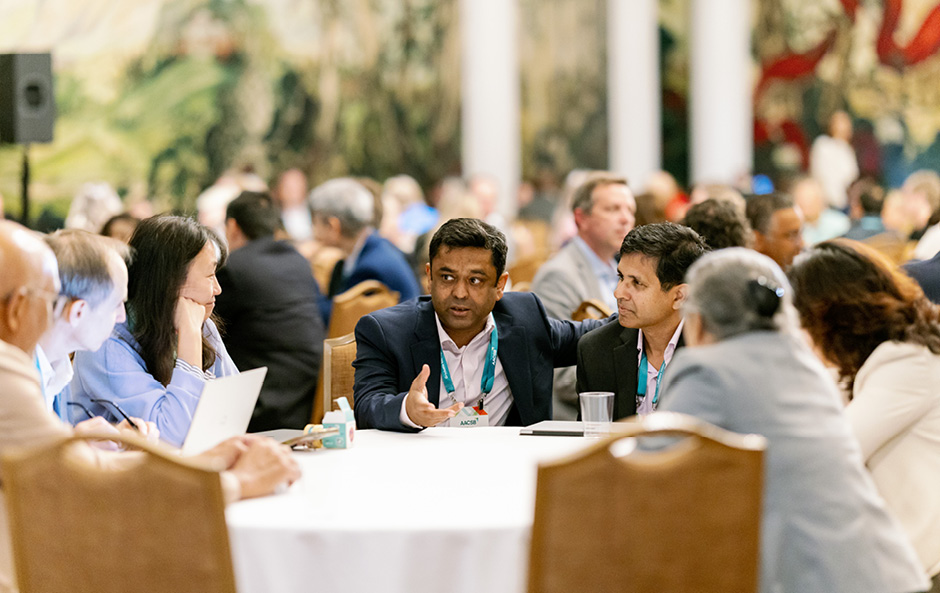
Leadership in today's business school environment comes with no shortage of complex challenges. In this interactive session, associate deans will come together to discuss the most pressing issues affecting their roles—from faculty and curriculum management to accreditation, student success, AI integration, and strategic priorities. Through facilitated small-group discussions, participants will share experiences, exchange practical ideas, and collaborate on solutions to common challenges. This session provides a valuable opportunity to connect with peers, gain fresh perspectives, and leave with actionable insights from colleagues facing many of the same leadership questions.
Leadership often operates within established assumptions, competing priorities, and institutional traditions that can unintentionally limit innovation. Inspired by Roger von Oech's The Creative Contrarian, this highly interactive session invites associate deans to step outside conventional thinking and explore new possibilities through structured creative exercises. Participants will engage in collaborative "What if?" challenges, visual thinking activities, and guided reflection to reimagine business education leadership, institutional culture, student engagement, and innovation. Rather than focusing on immediate solutions, the session develops creative thinking as a leadership capability and introduces practical facilitation techniques participants can use to foster more innovative conversations within their own institutions.
As expectations for research impact continue to evolve, associate deans play a critical role in shaping the strategies, incentives, and environments that enable faculty to produce research that is both rigorous and relevant. This session will begin with highlights from AACSB's newly released report, A Framework for Research Impact: Insights, Pathways, and Calls to Action, developed by the Research Impact Task Force. A panel of associate deans and research leaders from a range of business schools will then discuss how institutions can foster research impact, align faculty incentives with strategic priorities, navigate implementation challenges, and strengthen the influence of business school research beyond academia.